
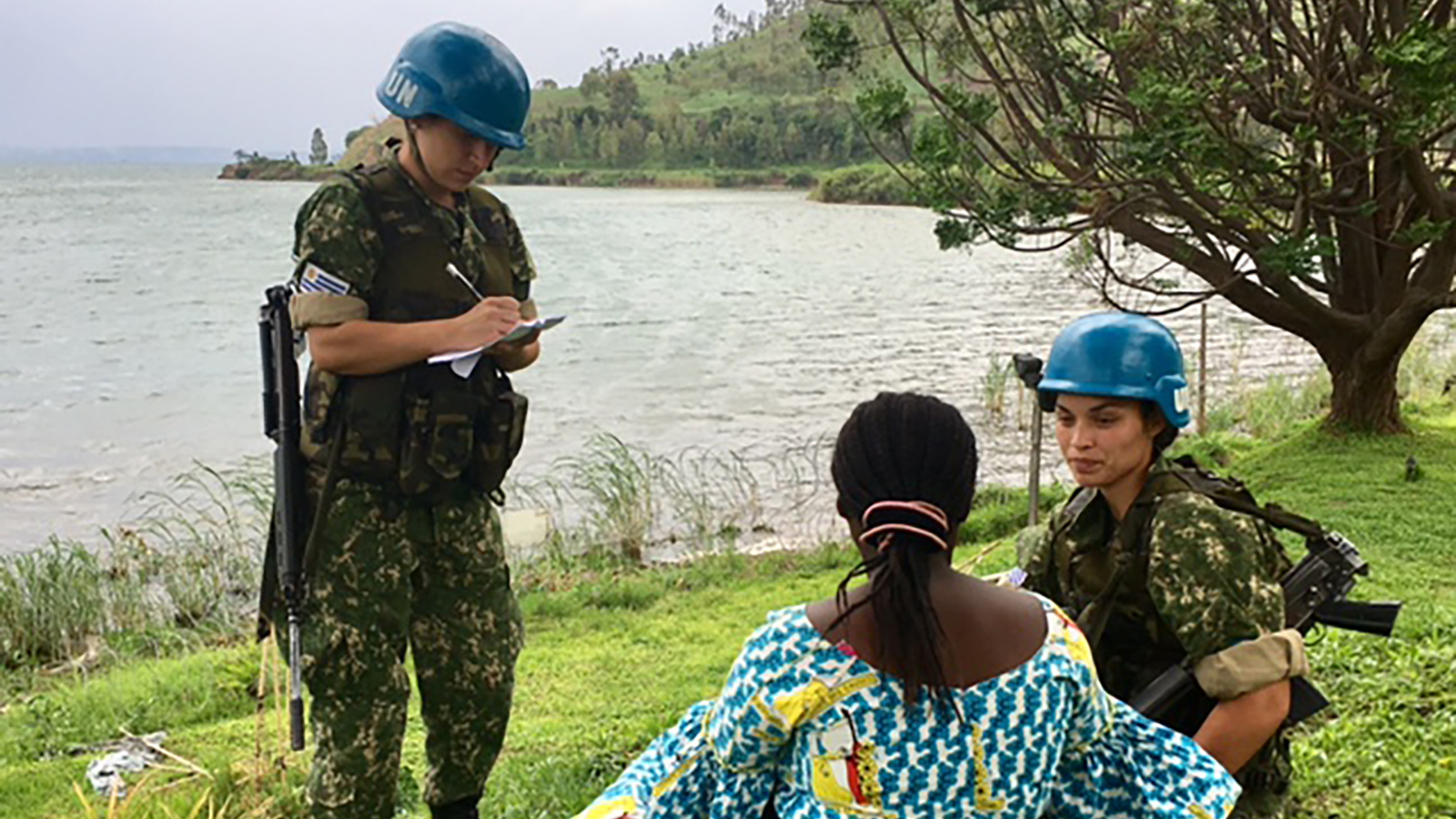
In many armed conflicts, rape and sexual violence in general are weapons of psychological and physical destruction used mainly against women in order to terrorize populations. However, despite United Nations resolutions and international condemnation, perpetrators are rarely found and convicted, as was recently the case in the Democratic Republic of Congo.
Rape as a Weapon of War
When we think of weapons of war, certain items like guns, grenades, and other forms of ammunition often come to mind. However, one of the most prevalent yet least condemned weapons in conflict zones is sexual violence inflicted on women and girls, from the very young to the elderly. While often overshadowed by more conventional forms of violence, rape has become a powerful tool of war, systematically used to break down individuals, families, and entire communities. This article aims to shed light on the devastating consequences of sexual violence in conflict, focusing on recent events in the Democratic Republic of Congo (DRC), and exploring the psychological, physical, and social toll it takes on survivors1.
A tragic recurrence in Muzenze
A recent tragedy in the DRC vividly illustrates this harsh reality. In the eastern region of the country, as the Rwandan-backed rebel group M23 advanced in their attempt to seize control of Goma, a mass escape took place at the local prison. On January 27, 2025, when the rebels successfully overtook the city, the male prisoners executed their escape plan. However, before fleeing, they entered the women’s wing of the prison and brutally raped every single female detainee. After setting fire to the prison, the prisoners fled the scene. Of the 165 women held in the facility, all were raped, and only 9 to 13 survived2. Due to the heightened danger posed by the rebel groups controlling the city, the investigation into the matter has been inadequate.
This was not Muzenze’s first tragedy. A similar incident had occurred at the same facility on the night of June 21 to 22, 2009. On that occasion, male inmates managed to break into the women’s wing using a grenade, injuring twelve individuals and killing a female prisoner and a police officer. They then proceeded to hold and sexually assault approximately twenty women. In the end, the perpetrators failed to escape, making the brutality of the attack all the more senseless3.
Considering that the root causes of such uprisings—namely the lack of prison policies, inadequate food, and insufficient healthcare—had already been well-documented, it is deeply discouraging to witness similar incidents still occurring 16 years later. The persistence of these conditions not only reflects systemic neglect but also signals a failure to implement meaningful reforms aimed at preventing such violence and ensuring the basic rights and safety of all incarcerated individuals4.
The psychological and physical impact of sexual violence
It is perplexing that the first instinct of these individuals, facing dire circumstances, is to cruelly harm women who have done nothing to provoke any of their suffering. Could it be that inflicting such violence is the only time they feel any semblance of “power”?
In the context of war, rape has long been used as a technique of psychological warfare. This horrendous act terrorizes and destroys individuals and entire communities. Survivors are often subjected to unspeakable horrors, with victims ranging from babies to grandmothers. The impact is far-reaching: survivors face emotional trauma, psychological damage, physical injuries, unwanted pregnancies, social stigma, and sexually transmitted infections. It brings immense suffering to communities, and it is outrageous that there have been at least 1.8 million reported cases of rape during conflict in the DRC since 1996.
Médecins Sans Frontières treated over 25,000 survivors in 2024 alone — more than two every hour5. The UN reported a 270% rise in sexual violence from January to February 2025, linked directly to the conflict in Goma and the Muzenze prison case6. In some displacement camps, 80% of women have reported having been raped7. Armed groups have raped minors as young as 10 years old8.
Rape, in these cases, transcends the physical act itself. It becomes a ritual of dehumanization. Some women are raped in front of their relatives, dead or alive. Others are cut, burned, mutilated, and then raped. Some are even assaulted by their own sons, or subjected to gang rape, one man after another, in front of their families. These acts are not only designed to inflict unimaginable pain on the individual but to dismantle entire families and communities9. Many believe that this is a deliberate tactic to force local populations to flee when the perpetrators arrive, facilitating their efforts to annex the areas they target.
Dehumanization and the destruction of communities
Although rape in conflict is now recognized as a crime against humanity and a war crime when it is widespread and systematic, it is frustrating to realize that it continues to go largely unpunished10. Under international law, particularly the Rome Statute of the International Criminal Court (1998), rape is explicitly listed as both a crime against humanity (Article 7) and a war crime (Article 8). This legal framework obliges states to investigate and prosecute such crimes, yet enforcement remains minimal.
Rape as a weapon of war is often forgotten in peace negotiations, underreported, and insufficiently investigated. This failure to hold perpetrators accountable leaves survivors isolated—rejected by their own families and communities in many cases—thereby exposing them to further trauma and insecurity (Amnesty International, 2011).
[table id=8 /]
The global silence and impunity around rape in conflict
In light of the horrors described, it becomes painfully evident that sexual violence in conflict zones, particularly rape, is not merely an incidental consequence of war but a calculated weapon of psychological and physical destruction. The stories from Muzenze and the broader context of the DRC paint a tragic portrait of how women and girls are systematically targeted, their suffering exacerbated by the lack of accountability and support for survivors. Despite being recognized as a war crime, the use of rape as a tactic continues unchecked, leaving deep scars not just on individuals but on entire communities. The silence surrounding this issue, both within international discourse and local contexts, perpetuates the cycle of violence and impunity.
It is critical that the global community acknowledge and address this brutal form of warfare with the urgency and seriousness it demands. Survivors must not be left to bear their pain alone but should be offered justice, care, and protection. Only then can we begin to hope for a future where women and girls in conflict zones are not seen as spoils of war, but as individuals deserving of dignity, security, and peace.
References
1. United Nations Security Council. (2008). Report of the Secretary-General on conflict-related sexual violence.
2. Lamb., C. (April 2025). “Dr Miracle tells the West: Stop ignoring our war”. The Times. Retrieved from : https://www.thetimes.co.uk/article/democratic-republic-congo-rwanda-conflict-dr-denis-mukwege-cdz56n03d
3. Human Rights Watch. (2002). The War Within the War: Sexual Violence Against Women and Girls in the Democratic Republic of Congo. Retrieved from : https://www.hrw.org/reports/2002/drc/Congo0602.pdf. ISBN : 1-56432-276-9
4. Amnesty International. (2011). “Democratic Republic of the Congo: Rape as a weapon of war”.
5. European Parliament (2024). “Debate on the use of sexual violence as a weapon of war in the Democratic Republic of the Congo”. Retrieved from : https://www.europarl.europa.eu/doceo/document/CRE-10-2024-12-17-INT-2017008904395_EN.html
6. Lamb., C. (April 2025). op. cit.
7. European Parliament (2024). op. cit.
8. Reuters (February 2025). “Children face lethal violence, rape in east Congo war”. Retrieved from : https://www.reuters.com/world/africa/children-face-lethal-violence-rape-east-congo-war-2025-02-24/
9. Human Rights Watch. (2002). op. cit.
10. United Nations Security Council. (2008). op. cit.
11. Amnesty International. (2011). op. cit.