
The second part of this article will seek to bring these historical continuities to life through contemporary accounts from plantation workers and an analysis of today’s major agro-industrial players. Finally, it offers a critical reflection on the very concept of culinary heritage in Malaysia, examining the tensions between nostalgia, colonial legacy, and social justice.
You can read or reread Part 1 here
Part 4 — Contemporary Accounts and the Persistence of Colonial Structures
Invisible Lives: The Voices of Migrant Workers
Despite their central role in Malaysian agricultural production, migrant workers are often overlooked in mainstream narratives. Yet their accounts clearly show that conditions on the plantations have changed little since colonial times.
An Indonesian worker at a palm oil plantation in Sabah recounts:
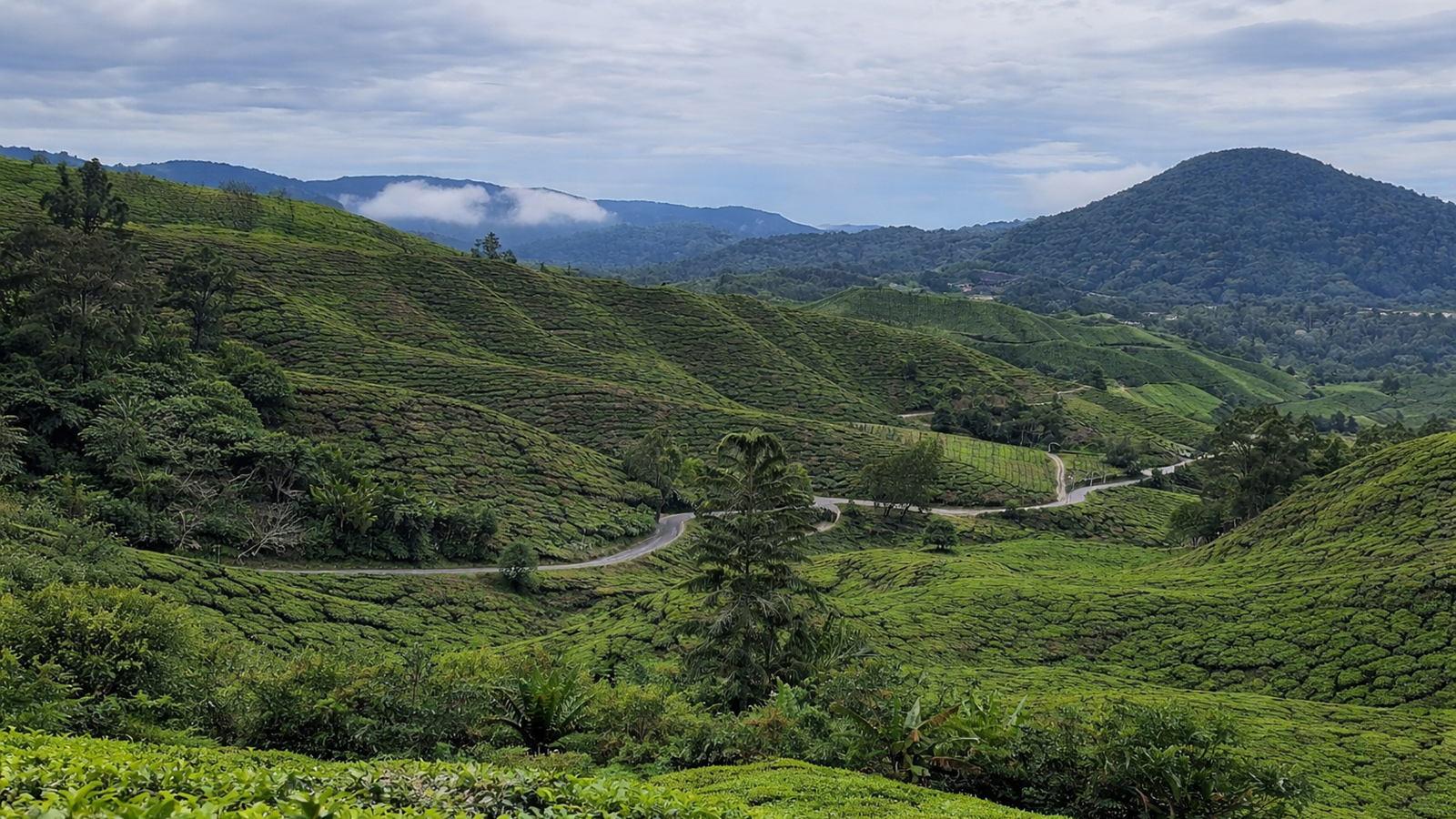
On the tea plantations of the Cameron Highlands, workers report that routines remain strictly hierarchical: local and foreign supervisors issue instructions, and repetitive tasks are strictly timed. These contemporary accounts highlight a continuum: hierarchy, control, and the dependence of migrant workers remain central to agricultural production, reproducing patterns established by British colonists.
The Impact of Modern Conglomerates
Even after independence, conglomerates such as Sime Darby and FELDA plantations continue to operate under similar economic models: large-scale farming, partial mechanization, reliance on low-wage migrant labor, and job-linked housing. A recent report indicates that nearly 70% of workers on certain Sime Darby plantations come from abroad and remain bound by restrictive contracts. Working conditions are often invisible to urban consumers, but they actually shape the entire food ecosystem: from plantations to processing factories, all the way to the kopitiams where tea and kaya toast are served daily.
The Paradox of Culinary Heritage
What we celebrate as “Malaysian tradition”—breakfast at the kopitiam, kaya toast, teh tarik—relies on production chains that remain unequal and hierarchical. Nostalgia and heritage branding transform these foods into cultural icons, but obscure the economic and social realities that underpin them. The persistence of these systems calls into question the very notion of heritage: is it a cultural legacy to be preserved, or a modern construct that conceals structures inherited from colonialism?
By tracing the journey from field to cup, it becomes clear that Malaysia’s “timeless” foods are deeply tied to naturalized colonial structures, which remain central to the daily lives of workers and consumers.
Part 5 — Conclusion and Critical Reflection
Malaysia’s kopitiams, with their colonial murals and neatly arranged goods, present a reassuring image: that of a timeless and authentic culinary heritage. Yet a closer look reveals a far more complex story. Every cup of tea, every slice of kaya toast, every sip of white coffee is rooted in a production system whose origins lie in British colonial rule.
Tea plantations such as BOH, vast coconut and sugar plantations, and palm oil monocultures controlled by modern conglomerates like Sime Darby and FELDA continue to rely heavily on a migrant workforce. Hierarchical structures and working conditions—job-linked housing, restricted mobility, low pay—reflect models established nearly a century ago. This historical continuity invites us to rethink what “tradition” means in Malaysia. The flavor, celebrated for its authenticity, is in reality inseparable from a long-ignored economic and social legacy. Nostalgia and heritage branding in kopitiams normalize systems that, while not visible, remain powerful and influential in contemporary food production.
Understanding these production chains—from farm to cup—opens up space for critical reflection on labor, ownership, and exploitation. Urban consumers can thus appreciate the cultural richness of Malaysian cuisine while remaining aware of the power dynamics and inequalities that underpin it. Culinary heritage then becomes not only a source of pleasure, but also a starting point for questioning colonial history and its lingering effects in the present.
Ultimately, what we consume in kopitiams is not merely a taste or a ritual; it is a living, complex legacy where colonial history and modernity intertwine. Recognizing this critical continuity allows us to celebrate Malaysia’s culinary heritage while shedding light on the social and economic realities that have shaped it and continue to shape it.