
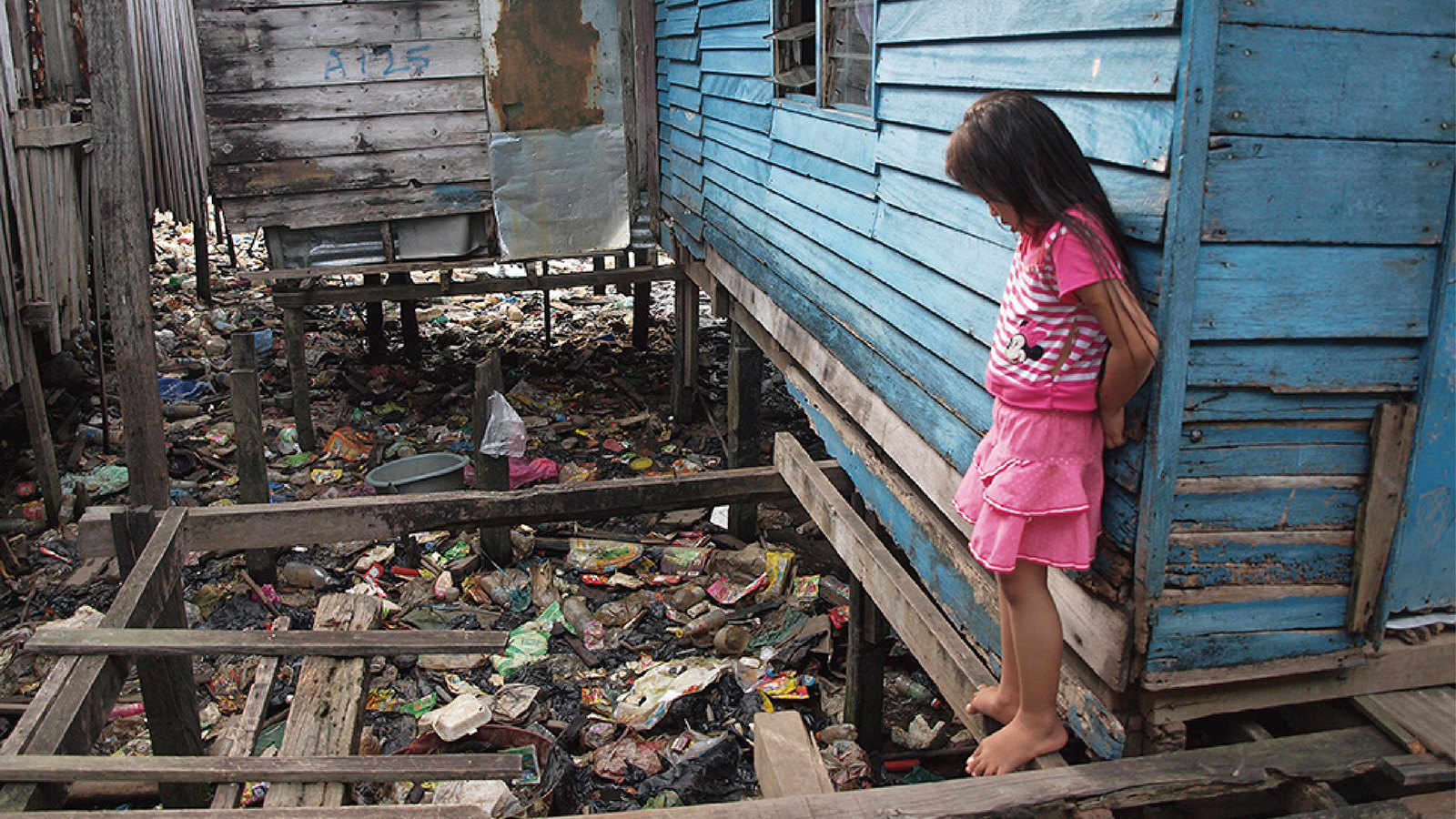
Malaysia is one of the Asian countries that, for several decades, has been the victim of waste exports from the West, across all sectors. Canada participates in this migration of its own waste to Malaysia, but the country is putting policies in place to stop serving as a dumping ground for rich countries.
Environmental degradation is one of the most immediately visible consequences of rapid economic growth in Southeast Asia. Visitors from more developed countries will quickly notice that trash and pollution are not peripheral issues in the region but rather they are simply a major part of the everyday urban landscape. Pollution and waste management challenges are woven into daily life in many major cities in the region. But to stop there and describe the region as “dirty” risks mistaking exposure for origin. Southeast Asia is visibly burdened by the material consequences of rapid development, but what appears as disorder to Western visitors is often a manifestation of the global supply chains that structure their own lives. While air quality issues dominate headlines in places like Hanoi, solid waste presents a different problem in Kuala Lumpur. A closer examination reveals that the visibility of waste in Kuala Lumpur is not evidence of Malaysian disorder, but rather it is a geographic expression of a paradox found in Canadian cleanliness.
In Malaysia, a first-time traveler from the developed world will have a hard time ignoring the sheer volume of garbage in the urban districts of Kuala Lumpur. Trash punctuates the city’s urban infrastructure as often as the tropical vegetation upon which Kuala Lumpur was built. The rainforest’s native dipterocarpaceae flora peacocks alongside shiny pastel wrappers on roadsides, waterways, and vacant lots, reflecting gaps in municipal waste collection, recycling infrastructure, and anti-littering policy enforcement. As Malaysia continues to develop and urbanize, officials lament how increased consumption has outpaced the systems designed to manage waste byproducts1. During New Year’s celebrations marking the launch of the country’s Visit Malaysia 2026 campaign, Tourism Minister Tiong King Sing underscored the responsibility of local communities in preserving the public spaces which maintain Malaysia’s image and reputation as a top travel destination in the region and beyond2. Minister Sing’s remarks during the New Year echoed the words of the capital region’s Constitutional Monarch, Sultan Sharafuddin Idris Shah, who just a month earlier exclaimed he was “fed up” of receiving complaints about the quantity of garbage clogging the country’s jetties, alleys, and overflowing from public garbage bins.
My own experiences in Kuala Lumpur do little to contradict the concerns voiced by Minister Sing and Sultan Sharafuddin. At an expatriate networking event, a London-based Danish property manager confided that she was cutting her stay short because she could not adjust to what she described as the city’s disorder, referring specifically to the visibility of trash along major streets. Her reaction was blunt but not uncommon among newcomers from more developed parts of the world.
It was not uncommon to see all manner of tropical insects circumambulating overflowing, unlined public garbage bins in busy tourist areas. Standing outside the Petronas Towers, watching plastic cups and food containers collect at the base of a bin, one might reasonably start to wonder: how difficult can it be to line and empty a handful of waste receptacles each day? Surely the capital city of a petro-state with advanced public transit infrastructure can spare the resources to hire public sanitation workers who will maintain the cleanliness of busy tourist areas. But reducing the problem to the absence of bin liners or municipal workers risks missing the larger structure that produces the waste littered around Kuala Lumpur in the first place. Answering the question of why garbage is visible in the city requires recognizing that waste is not simply disposed of, but rather it moves along complex global chains of production, export, and trade.
The story of garbage in Malaysia does not begin nor does it end with Malaysian consumption habits. For decades, countries like Canada quietly exported their waste to East and Southeast Asia, externalizing the environmental and political costs of their own consumer economies. In 2013, “Operation Green Fence” saw China begin to enforce waste import policies that were announced in 2011. This was followed by enacting a stricter ban in 2018 under “Operation National Sword” that cited concerns about contamination in waste imports3. These new policies resulted in containers of Canadian household waste and plastics that were originally bound for China, often mislabeled or contaminated beyond recycling viability, to be redirected to Malaysia and other Southeast Asian countries. Former Malaysian Prime Minister, Mahathir Mohamad, referred to the practice as “deeply unfair” at that time4. Entire villages in Selangor found themselves living beside illegal plastic processing sites, where foreign waste was burned in open air pits or dumped in unregulated landfills as Malaysia did not have the infrastructure in place to deal with the defective waste5. Eventually, the country opted to enact stricter inspection protocols resulting in defective shipments being sent back to Canada6. The Canadian response to China’s tightening of waste imports was to seek remediation through the World Trade Organization rather than to address valid concerns about contaminated recycling7.
The myth of cleanliness and waste disposal in the developed world is built on distance. The belief that waste can be solved at the scale of picking up a gum wrapper on a hike rests on immense infrastructural privilege. Reducing waste to a moral lesson about not littering ignores the global systems that manufacture, transport, and relocate it. Once a recycling or garbage bin is wheeled to the curb, the problem appears to vanish. In reality, the problem is only displaced. Framing garbage as something that moves neatly from the consumer to the bin lacks a fundamental sense of object permanence: once deposited, garbage does not vanish, rather it persists within a complex global chain of labor, infrastructure, and environmental consequence. That displacement becomes visible in Malaysia.
While climate shapes the tolerability of accumulated waste, it can also illustrate a hierarchy of relations in the exchange between Canada and Malaysia. A Canadian winter freezes organic waste in place; cold air suppresses odor and slows decomposition. Many Montrealers mark the season’s first snowfall by moving their compost bins outside precisely because the subzero temperatures neutralize any odour the organic products would otherwise produce. In Kuala Lumpur’s ever-present equatorial heat, decomposition does not pause. It ferments. Organic waste breaks down quickly, sweet and acrid at once, the air thickens around alleyways and junctions where bins sit too long in the sun. What might remain inert for months in a Canadian winter is an immediate olfactory offense in the tropics. The very climate that would allow Canada to store organic matter without sensory offence is instead ignored and replaced by one that accelerates decay and makes it impossible to ignore. This is more than an aesthetic difference: the ability to ignore fundamental factors such as landsize or climate when it comes to designing waste policy is an immense geopolitical privilege.
There is nothing striking about seeing waste in a metropolis. What is different about waste in Kuala Lumpur is not the visibility of litter, but rather the permanence of it. Garbage constantly accumulates in ways that are harder to ignore than in most Canadian cities. In Montréal, bagged waste is visible weekly around collection day but it is quickly gathered, compacted, and transported out of sight. In Malaysia, it lingers in drains after heavy monsoon rains, collects in fences, and decorates the edges of highways where development presses against the remaining forest. The difference is not moral; it is infrastructural and geopolitical. One country exports the byproducts of consumption. The other absorbs them. If anything, Malaysians may understand better than most that “throwing something away” is a fiction. There is no “away” in throwing away, only relocation. For decades that relocation has moved waste from West to East under a paradigm sometimes referred to as the global waste trade.
The empty single-use smoothie cups accumulating beneath a bin in Kuala Lumpur are not simply the product of local littering, they are artifacts of a logistics system that made distance profitable. The logic behind the shipping of waste is that it creates productive opportunities in countries that do not have other means to stimulate their economies. The economics of global trade make this system both durable and fragile. Shipping containers arrive in North America full of consumer goods and would otherwise return to Asia empty. Filling them with compressed plastic waste became a rational economic decision: labor costs were lower in importing countries and environmental enforcement was uneven. Some economic analyses defend this reasoning by arguing that hazardous waste poses comparatively lower marginal risk in poorer countries where other risks are more immediate8. The Global Waste trade is built on that core assumption and whenever it fails or is challenged, the infrastructure built on it struggles to adjust.
In February 2026, Malaysia announced an immediate ban on imported electronic waste, a move that further signals the country’s unwillingness to remain a repository for the world’s discarded materials9. The ban reflects a growing sentiment among Southeast Asian governments that waste imports of plastics, electronics, and other hard-to-process items are not an economic boon but an environmental burden that only stretches local infrastructure and harms their local communities. Canadian municipalities have treated the export of waste as a cost-effective disposal option, assuming that distant markets would always be ready to absorb whatever materials could not be processed domestically. Now, destination countries are signaling they will not be passive partners in this arrangement. By tightening import controls on certain waste streams, Malaysia is redefining the terms of the global waste trade, forcing exporting nations to rethink their reliance on overseas markets for disposal.
The Basel Convention, adopted in 1989, was created in response to the subterfuge that characterized waste trafficking scandals of the 1980s, most famously the Khian Sea incident10. In that case, a ship carrying toxic incinerator ash from Philadelphia attempted and failed to evade scrutiny by changing names and ports as it searched for a country willing to accept its cargo for over two years. The waste cargo was eventually illegally dumped off of the coast of Haiti in the late 1980s and finally, following a diplomatic row and international outrage, returned to Florida where it was moved to a landfill in 2002 after sitting on a Florida dock for two years11.
While Canada became a signatory to the Basel Convention in 1989, as of 2024 Parliament had not yet ratified the parts of it that would ban exporting waste12. In the meantime, Canada has accumulated its own examples of what happens when the global waste trade fractures. Waste materials that had traditionally flowed through established export channels found themselves stranded after local municipalities were slow to react to China’s ban on the import of low quality and contaminated foreign plastic and other recyclables. After being turned away by Beijing, shipments of mislabeled Canadian waste began surfacing in Southeast Asia where governments pushed back.
In 2019, the Philippines threatened diplomatic retaliation and outright war after a private company brought contaminated containers of Canadian waste to the ports of Manila where they sat for years13. The cargo was largely made up of household waste. The cost of repatriating it to Vancouver for incineration cost Canadian taxpayers over $2 million in shipping and various port fees. Malaysia, now the second most popular destination for Canadian waste after the US, likewise has returned contaminated shipments to countries of origin on numerous occasions, including to Canada14. What had long functioned as an invisible supply chain for benevolent disposal was abruptly exposed. Critics of China’s “Operation Green Fence” have argued that it was a move designed to externalize sorting costs for Chinese manufacturers15. However, if this waste was as valuable as proponents of the global waste trade insist, a policy shift in a single country should not result in a complete rupture in systems of disposal. Municipal programs built on the assumption that recyclables would always find an overseas buyer struggled to adjust when that assumption failed.
Learning some of the minutiae of the global waste trade should not be fatalistic. It should not give individuals the impression that they are powerless in a complex web of relations that includes private shipping contracts, international treaties, and opaque commodity markets. The global waste trade is messy, diffuse, and populated by many actors like municipalities, provinces, private haulers, exporters, regulators, illegal recycling facilities, and consumers. Precisely because it is so decentralized, movement and pressure from any node in the system can matter and effect positive change. Most directly, individuals can reduce the amount of waste their household creates by using their city’s organic composting program if that exists. In Montreal, organic waste is composted just north of the Pierre Elliot Trudeau airport, in the Saint Laurent borough, after which it gets used in the city’s various parks and even made available directly to residents free of cost16.
Canada will not be the first country forced to confront the fragility of its recycling model as a result of the Chinese import ban. Canadian tourists to Europe often comment on European bottle recycling facilities sorting amber, green, and clear glass bottles separately. In Japan, the scarcity of public bins since 1995 following an anthrax attack plot results in individuals assuming temporary custody of their waste until they are able to dispose of it properly in their own homes, reinforcing a culture of sorting and accountability. South Korea’s stringent waste sorting policy saw the capital region resort to the removal of garbage receptacles from the city’s subway system when private households began misusing them to circumvent the new guidelines17. Each of these cases reflects the same lesson, the system of exporting unsorted garbage is no longer tenable.
Here at home, cities like Edmonton, Halifax, and Montréal have all been forced to roll out new municipal disposal programs in the last few years. Data from the Institute for Research on Public Policy gives cause for hope: just three provinces, Ontario, Quebec, and British Columbia, produce around 90% of the country’s waste exports18. While national plastic waste exports fell by roughly 30% between 2016 and 2022, the reduction was led by British Columbia which slashed its garbage exports by nearly 70%, shrinking its share of national waste exports from 15% percent to just 5%. Much of that decline can be attributed to the province’s new ambitious recycling and waste to energy programs. Ontario and Quebec reduced exports as well, but only by about 5% during the same period. These reforms have not eliminated Canada’s reliance on foreign markets. But they demonstrate something important: policy choices alter waste flows. Regulatory design matters. Sorting standards matter. British Columbia’s example offers municipalities a model that has already proven itself capable of reducing garbage exports in a Canadian context.
The insects circling an unlined bin in Kuala Lumpur are not evidence of Malaysian failure. They are evidence of a global system that has finally run out of places to hide its waste. As Malaysia’s former Prime Minister Mohamad warned, “when you pollute one part of the world, you pollute the rest of the world also,” because waste does not disappear, it circulates19.
References
1. Jan Zilinsky. (May 2019). “Malaysia to Send Back 3,000 Tonnes of Plastic Waste to Canada”. CBC News. https://www.cbc.ca/news/world/sp-malaysia-canada-garbage-1.5155558
2. Chad Bray. (January 2026). “Malaysia’s Tourism Minister Urges Warmer Welcomes After Complaints”. South China Morning Post. https://www.scmp.com/week-asia/health-environment/article/3338392/malaysias-tourism-minister-urges-warmer-welcomes-after-less-friendly-complaints
3. Will Flower. (February 2016). “What Operation Green Fence Has Meant for Recycling,” Waste360. https://www.waste360.com/waste-management-business/what-operation-green-fence-has- meant-for-recycling
4. Jan Zilinsky. (May 2019). “Malaysia to Send Back 3,000 Tonnes of Plastic Waste to Canada”. CBC News. https://www.cbc.ca/news/world/sp-malaysia-canada-garbage-1.5155558
5. Jonathan Head. (February 2019). “Malaysia Cracks Down on Illegal Plastic Recycling”. BBC News. https://www.bbc.com/news/world-asia-46518747
6. Katie Dangerfield. (January 2020). “Malaysia Ships Back More Canadian Plastic Waste”. Global News. https://globalnews.ca/news/6436078/malaysia-sends-back-trash-canada/
7. Simon Lester. (October 2017). “China’s Import Restrictions and the WTO,” World Trade Organization News. https://www.wto.org/english/news_e/news17_e/impl_03oct17_e.htm
8. Jagdish Bhagwati. (2007). “The Case for Free Trade in Hazardous Waste”. Cato Journal 27, no. 3. pp. 341–346. https://www.cato.org/sites/cato.org/files/serials/files/cato-journal/2007/11/cj27n3-6.pdf
9. Canadian Press. (February 2026). “Malaysia Bans E-Waste Imports”. Yahoo Finance Canada. https://ca.finance.yahoo.com/news/malaysia-bans-e-waste-imports-043753821.html
10. Government of Canada. (June 2023). The Basel Convention. https://www.canada.ca/en/environment-climate-change/services/managing-reducing-waste/international-commitments/basel-convention-control-transboundary-movements.html
11. Tom Avril. (June 2002). “The Khian Sea Waste Dumping Incident”. Philly.com. Retrieved from : https://web.archive.org/web/20150211000151/http://articles.philly.com/2002-06-15/news/25349397_1_antrim-township-mountain-view-reclamation-landfill-khian-sea
12. Natasha Bulowski. (June 2024). “Will Malaysia Remain Canada’s Plastic Dumping Ground?”. FairPlanet. https://www.fairplanet.org/editors-pick/will-malaysia-remain-canadas-plastic-dumping-ground/
13. Catherine Cullen. (April 2019). “Duterte Threatens ‘War’ Over Canadian Garbage”. CBC News. https://www.cbc.ca/news/politics/duterte-canada-president-1.5107539
14. Katie Dangerfield. (January 2020). “Malaysia Ships Back More Canadian Plastic Waste”. Global News. https://globalnews.ca/news/6436078/malaysia-sends-back-trash-canada/
15. Will Flower. (February 2016). “What Operation Green Fence Has Meant for Recycling”. Waste360. https://www.waste360.com/waste-management-business/what-operation-green-fence-has- meant-for-recycling
16. Ville de Montréal. (November 2024). “Treatment Centre for Organic Waste: Locally Produced Compost”. https://montreal.ca/en/articles/treatment-centre-organic-waste-locally-produced-compost- 79059
17. Jung Da-hyun. (October 2023). “Lack of Trash Cans on Seoul Streets Causes Mess, Inconvenience”. The Korea Times. https://www.koreatimes.co.kr/southkorea/society/20231020/lack-of-trash-cans-on-seoul-streets-causes-mess-inconvenience
18. Mia Rabson. (May 2024). “Plastic Waste in Canada: Exports and Policy Gaps”. Policy Options. https://policyoptions.irpp.org/2024/05/platic-waste-canada/
19. Jan Zilinsky. (May 2019). “Malaysia to Send Back 3,000 Tonnes of Plastic Waste to Canada”. CBC News. https://www.cbc.ca/news/world/sp-malaysia-canada-garbage-1.5155558