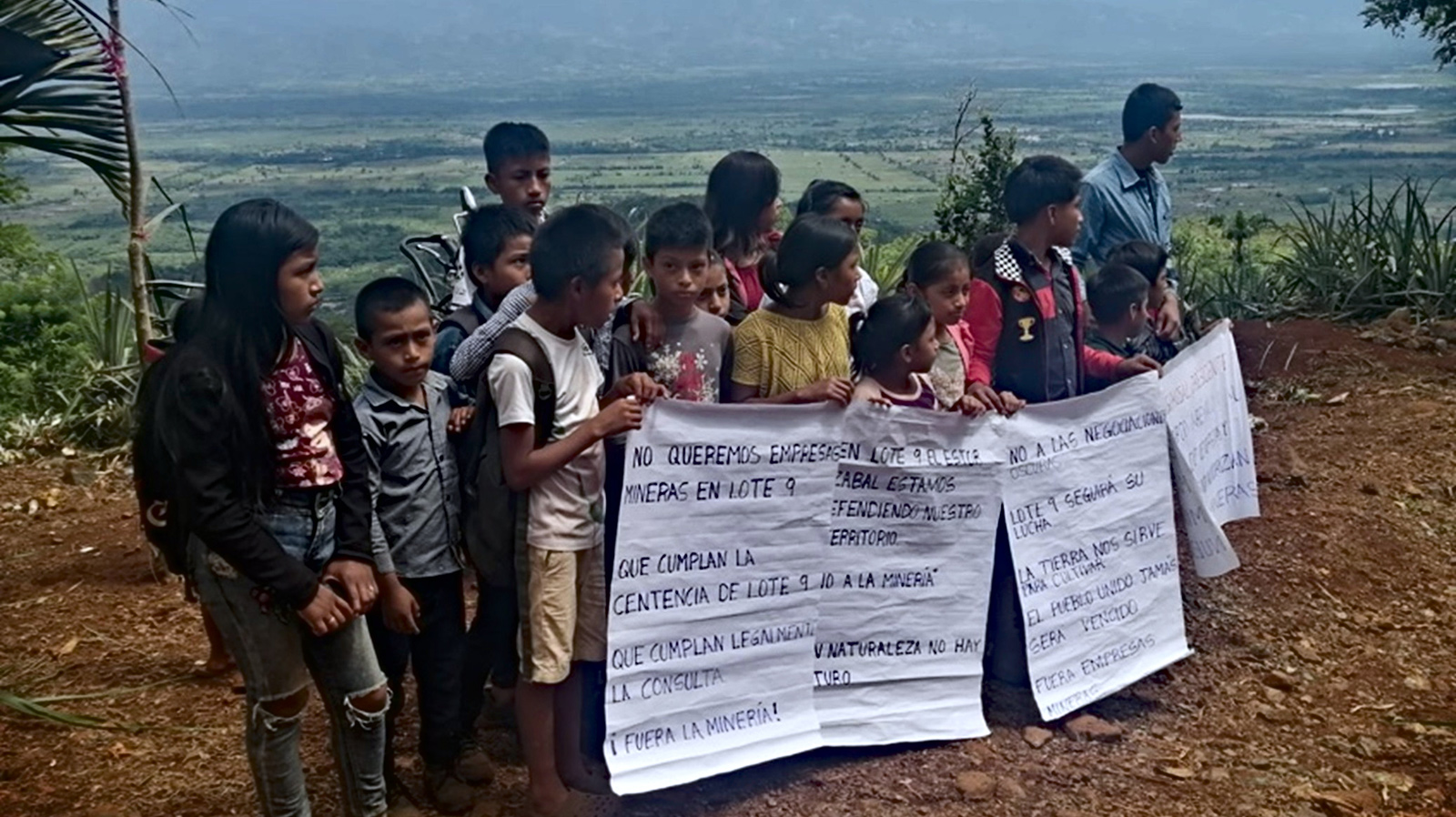
In Guatemala, indigenous villages and communities are attempting to resist mining projects that damage the environment and weaken the local economy, under the guise of economic development, largely driven by Canadian mining companies.
With nearly 9% of the world’s forests and a commitment to achieving net-zero carbon emissions by 2050, federal policy makers often praise Canada its ‘rapid’ transition towards a more sustainable economy. Yet, beneath the façade of pristine blue oceans and towering pine trees lies a much darker reality: the unsustainable extraction of natural resources.
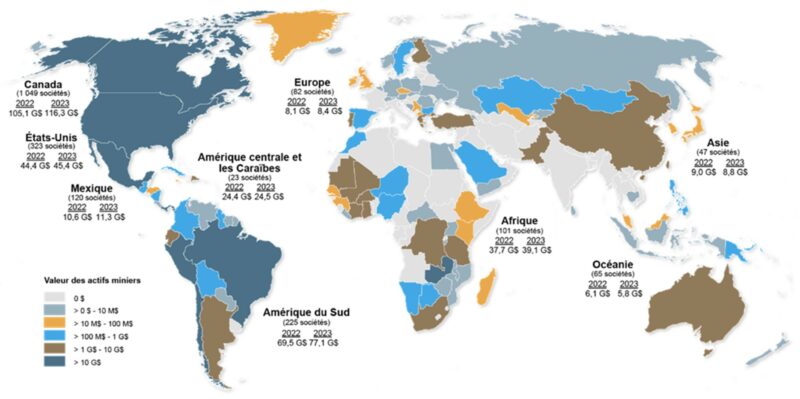
In Canada, the negative impacts of extractive projects disproportionately affect Indigenous communities, as they are often built on and near Indigenous land. This is a pattern not only within Canada’s borders; Canadian mining companies reproduce these inequities around the world. In fact, mining is a central pillar of Canada’s foreign investment strategy, and as of 2023, Canadian mining assets abroad totaled $220.4 billion.
Nowhere is the impact felt more than in Guatemala
At just 108,889 km2, around 14 times smaller than Quebec, Guatemala may seem like an unlikely epicentre for large-scale extractivism. Yet, despite its small size, Canadian mining companies, primarily gold, silver, coper, and nickel continue to establish both open-pit and tunnel mining operations throughout this Central American country. In 2023, Canadian mining assets in Guatemala totaled 446 million dollars, a level of investment made possible by policies created by the Guatemalan government many decades earlier.
From 1960-1996, Guatemala endured a brutal civil war during which the government committed widespread massacres and genocide against the Indigenous Mayan peoples. Following the war, Guatemala signed the Peace Accords in 1996, which brought greater macro and micro-economic stability and newfound hope for a better future. However, with this stability came the rapid onset of neoliberal reforms to attract foreign investment.
A key policy from this time was the 1997 Mining Law, which drastically reduced royalties, opened Guatemala to foreign firms, and granted companies large-scale access to fresh water. Even today, policies created during this time continue to make Guatemala a sought-after location for foreign companies, with its appeal and lure lying in its low royalties and taxes that allow profits to remain abroad.
Promises of local development that do not benefit communities and violence inherent in mining extractivism
Canadian mining companies, along with their stakeholders and proponents, often promise to bring economic opportunity and development to local communities; they argue that foreign investment promotes increased income, improved infrastructure, skills training, and economic growth. However, the minimal economic benefits that Guatemala does receive from these projects are held, all too often, in the hands of goverment officials and the narrow elite.
Meanwhile, the communities that have watched mines dig deeper and deeper into their land, never see the revenue. The most infamous Canadian mine was the Cerro Blanco project, an open-pit gold and silver mine first developed by the Canadian precious metal exploration company, Bluestone Resources. This project has been accused of contaminating local waterways and soil with arsenic and other toxic chemicals. The transboundary Lempa River has been most impacted, and the 4 million people who rely on this river have had their land poisoned and the health of their families and communities deteriorated.
Indigenous communities in Guatemala already face structural racism, in the forms of land dispossession, lack of infrastructure, and the marginalization of Indigenous languages and cultures. Mining has compounded these issues and fueled another crisis: increased social conflict. Community leaders and activists have continuously been persecuted, and as of 2016, 12 community members had been killed and 89 injured in conflict related to mining operations. Today, nearly a decade later, that number is likely higher, especially as foreign investors frequently underreport social-conflict. Furthermore, the destruction of the environment and lack of economic benefit have forced many residents to migrate to other communities and countries.
In response to these social and environmental inequities, indigenous communities across the country have mobilized resistance movements.
Article 19 of the United Nations Declaration on the Rights of Indigenous Peoples requires that:
“States shall consult and cooperate in good faith with the indigenous peoples concerned through their own representative institutions in order to obtain their free and informed consent prior to the approval of any project affecting their lands or territories and other resources, particularly in connection with the development, utilization or exploitation of mineral, water or other resources.”
Thus, the many mining companies currently operating on indigenous land throughout Guatemala without proper consultation are violating this right of this right.
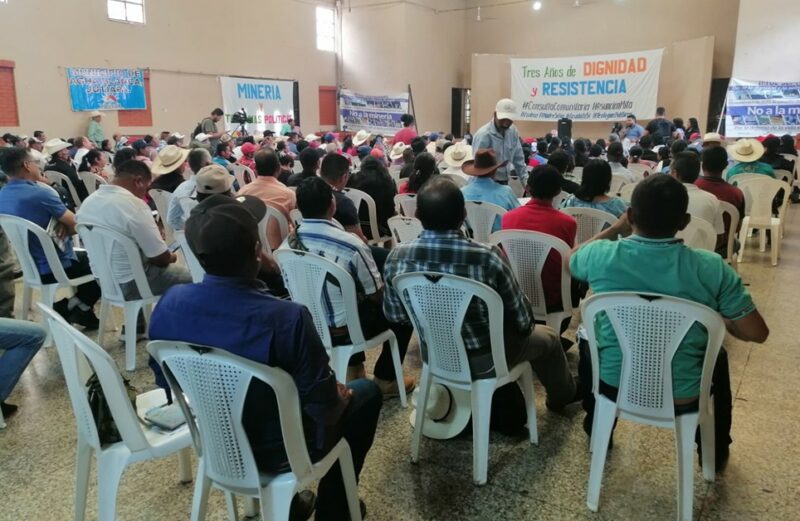
In 2022, Asunción Mita, a municipality of 50,000 people in southeastern Guatemala, organized a historic referendum against the Cerro Blanco gold mining project. Colectivo MadreSelva, an environmental organization, collaborated with the community and the neighbouring Santa Catarina Mita, to conduct a community consultation about the project, which since 2007 has been sold between several transnational companies, including Goldcorp and Bluestone Resources. The community engaged in legal actions opposing the project before state institutions such as the Ministry of Environment, as well as legal actions against financial institutions involved in extractive projects. In the referendum, 88% of voters in the community voted against the mine, a historic win.
As a result of activism and grassroots mobilization, the Cerro Blanco mining permit, which was initially granted for 25 years, was suspended in June 2024.
However, this good news for the community was short-lived. In early 2025, the mine was sold to Aura Minerals, another Canadian company. Instead of halting production, the project was renamed “Era Dorada” and expansion plans are currently underway.