
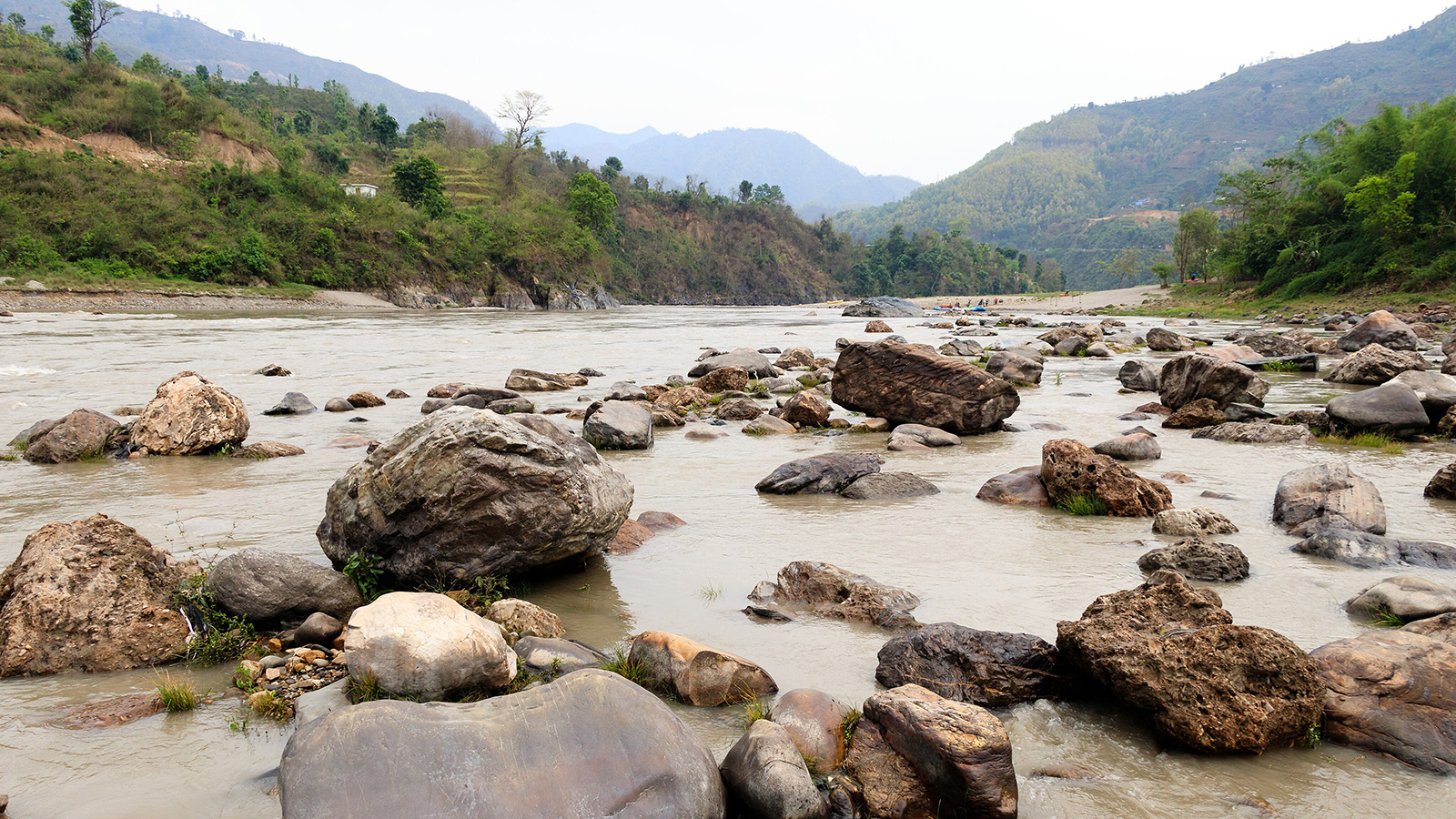
Nepal, a very mountainous country, relies heavily on hydroelectricity for its domestic consumption. However, despite concrete progress in human rights by companies, the country still struggles to respect certain workers’ rights, while developing its hydroelectric sector in an environmentally friendly manner.
One of my mandates while interning at the Nepal Development Initiative (NEDI), a non-profit organization dedicated to promoting green enterprises and addressing environmental challenges in Kathmandu and across Nepal1, was to produce a qualitative research report on the current state of affairs regarding Business and Human Rights (BHR) in Nepal, with a focus on the country’s expanding hydropower sector.
While hydropower offers significant opportunities for economic growth and regional energy cooperation, it also raises serious human rights concerns, including forced displacement, unsafe working conditions, and limited community participation. BHR entered the global spotlight with the adoption of the United Nations Guiding Principles on Business and Human Rights (UNGPs) in 2011. As the Office of the United Nations High Commissioner for Human Rights (OHCHR) has emphasized, states are obligated under international human rights law to protect individuals from abuses by third parties, including business enterprises, within their jurisdiction. At the same time, businesses are independently expected to respect human rights by avoiding harm and addressing any negative impacts of their operations. Victims must also have access to effective remedies through both judicial and non-judicial mechanisms2.
Nepal’s domestic legal framework provides key labour and social protections through the 2015 Constitution, the 2017 Labour Act, and the 2018 Social Security Act, along with the recent launch of its first National Action Plan (NAP) on Business and Human Rights (2024–2028). While these measures bring Nepal closer to international standards, their enforcement remains weak. Businesses often view BHR obligations as administrative burdens rather than essential safeguards. Implementation gaps stem from limited accountability, weak monitoring mechanisms, and low awareness among both companies and workers.
Internationally recognized tools such as Human Rights Impact Assessments (HRIAs) and Sector-Wide Impact Assessments (SWIAs), which are widely applied in other countries, remain absent in Nepal. Yet, they could provide structured ways to evaluate risks, strengthen corporate accountability, and ensure the protection of vulnerable groups. These tools are designed to identify, assess, and address the potential adverse human rights impacts of business operations on affected stakeholders. They can be customized to address sector-specific risks while maintaining their core objective of strengthening protections and enhancing accountability. For Nepal to move forward, it must adopt such tools, raise awareness among workers, and establish transparent reporting systems to ensure that laws translate into practice, particularly in high-risk sectors like hydropower. This approach directly supports the third pillar of the UNGPs, which establishes the corporate responsibility to respect human rights as a universal standard of conduct. Globally, at least thirty-one countries have integrated HRIAs into their corporate accountability frameworks, yet Nepal has not adopted these practices3.
For this report, I had the opportunity to interview Mr. Bishnu Prasad Timilsina, a senior advocate at the Forum for Protection of Consumer Rights in Nepal4, to discuss the current situation of BHR in Nepal and the gaps and challenges that would need to be addressed by policymakers and corporate entities in the upcoming years. In Nepal, BHR is a relatively new topic, as there is no clear, coordinated strategy for governing BHR, despite the global discourse on BHR being formally introduced in 2011 with the endorsement of the UNGPs. A major development was the adoption of Nepal’s National Action Plan (NAP) on BHR in March 2024, which finally brought national attention to the issue5. However, in the absence of a robust framework and with major investors employing diverging BHR approaches, companies often evade key obligations6. Many senior executives and business leaders continue to perceive BHR requirements as costly administrative burdens that could reduce profits by adding procedural steps to project lifecycles. This regulatory vacuum allows companies to sidestep human rights obligations, undermining accountability and worker protections. It is therefore crucial to understand how BHR is approached in projects financed by non-Western regimes, whose norms, priorities, and enforcement mechanisms often differ significantly from those of Western donors, potentially shaping distinct standards of corporate conduct in Nepal’s hydropower sector.
The sector illustrates a clear divide between Western and non-Western approaches to BHR. Western financiers such as the World Bank, IFC, and ADB generally apply international frameworks (UNGPs, IFC Standards, OECD Guidelines), requiring structured safeguards, transparent reporting, and community engagement. For example, the Upper Trishuli-1 project includes Indigenous-specific funds but integrated Free, Prior, and Informed Consent (FPIC) requirements only after IFC’s involvement7. By contrast, Chinese- and Indian-backed projects like Arun III and Tamakoshi V prioritize speed and compliance with host-country regulations but often lack transparency, effective grievance mechanisms, and adequate consultation, resulting in frequent human rights complaints8. The comparison suggests that Western-financed projects are slower but more compliant with rights standards, while non-Western projects are faster but weaker on safeguards. Nepal thus requires a dual strategy: strengthening FPIC and safety standards in Western-financed projects, while simultaneously improving transparency, accountability, and community protections in non-Western projects to ensure inclusive and rights-respecting hydropower development.
A review of BHR in Nepal’s hydropower sector reveals persistent gaps in labour rights, community consultation, environmental safeguards, and corporate accountability.
Addressing these gaps requires coordinated action from government, businesses, and civil society. Although Nepal has a solid legal framework, enforcement remains inadequate, with hydropower workers often facing hazardous conditions, unfair pay, and limited access to grievance mechanisms. Strengthening protections for informal and contract workers, as illustrated by the Tamakoshi V case, is essential. Equally important are stricter donor conditionalities and greater attention to environmental and social impacts. The Nepal BHR Network’s recommendations, including sectoral assessments, inclusive consultations, focus on foreign direct investment (FDI)-enabled projects, and mandatory Human Rights Due Diligence (HRDD), offer a roadmap for reform. Expanding the use of HRIAs, coupled with training and incentives for businesses, would further institutionalize accountability and promote more rights-respecting hydropower development.
In conclusion, Nepal has made important strides toward building a BHR framework, most notably through the adoption of its first National Action Plan. However, the hydropower sector still suffers from weak enforcement, poor labour protections, inadequate community consultation, and limited grievance mechanisms. The contrast between Western financiers, who generally follow international standards, and non-Western financiers, who prioritize speed over safeguards, complicates progress. To ensure that hydropower development is both sustainable and rights-respecting, Nepal must strengthen accountability, enforce human rights due diligence, and foster inclusive, multi-stakeholder engagement, thereby transforming its green energy expansion into a model for socially responsible development.
References
1. Nepal Development Initiative. (2025). “Creating Sustainable Change with Social Entrepreneurship”. Retrieved from : https://www.nedi.org.np/
2. Office of the United Nations High Commissioner for Human Rights. (2025). “OHCHR and business and human rights”. Retrieved from : https://www.ohchr.org/en/business-and-human-rights
3. National Baseline Tool on Business and Human Rights. (n.d.). About. Retrieved from : https://bhrbaseline.humanrights.dk/about
4. Forum for Protection of Consumer Rights- Nepal. (2025). Retrieved from : https://consumerright.org.np/
5. National Action Plans on Business and Human Rights. (n.d.). Nepal. Retrieved from : https://globalnaps.org/country/nepal/
6. Aryal, S. (2024). “Evolution and future prospects of hydropower sector in Nepal: A review”. Heliyon, 10, p.1. https://www.sciencedirect.com/science/article/pii/S2405844024071706
7. ADB Institute. (2019). “Upper Trishuli-1 Hydropower Project (Nepal)”. Retrieved from : https://www.adb.org/projects/49086-001/main
8. República. (August 8, 2024). “NHRC receives complaints on negative impacts of hydropower projects”. https://myrepublica.nagariknetwork.com/news/nhrc-receives-complaints-on-negative-impacts-of-hydropower-projects