
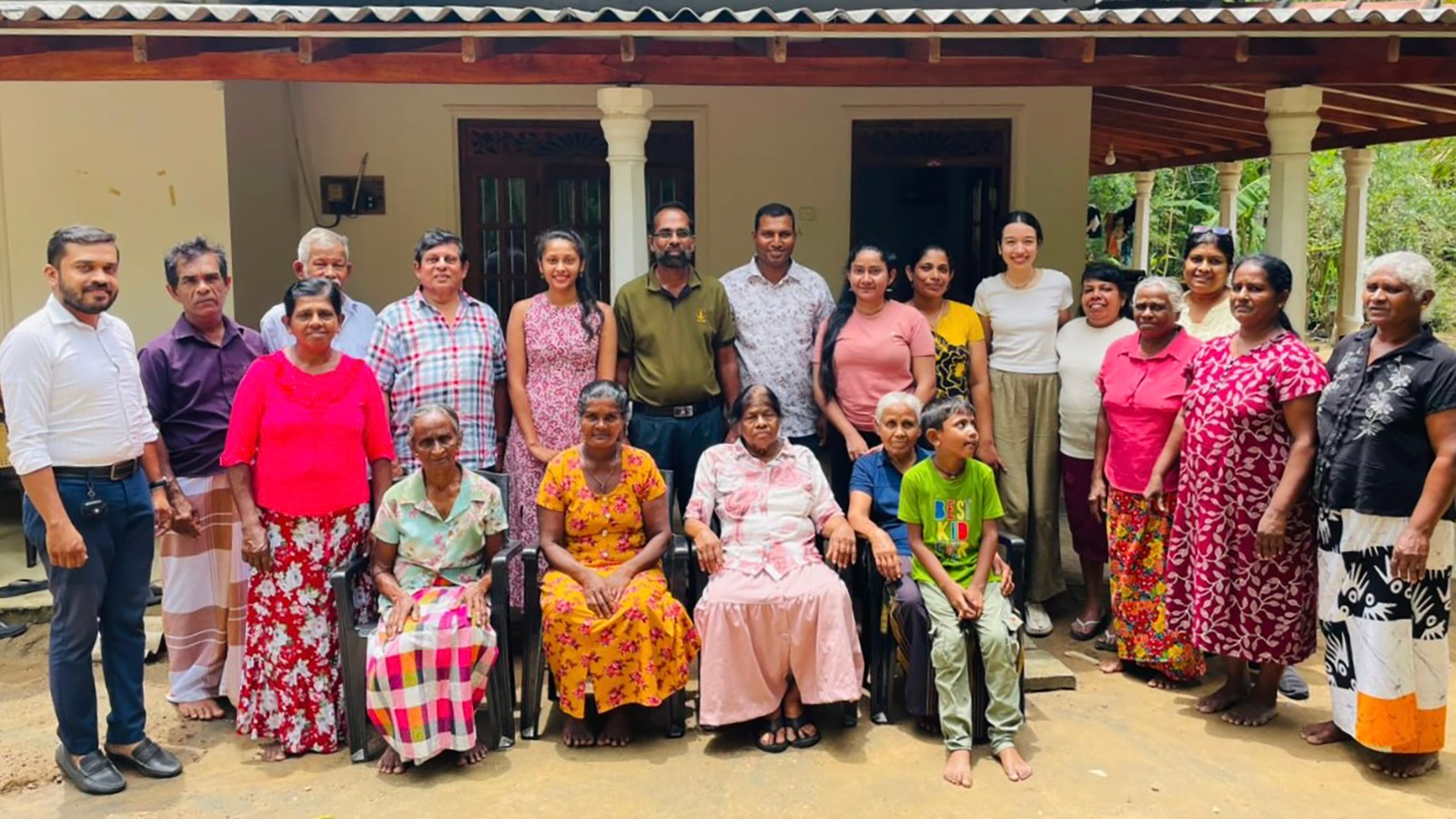
In the villages of Kurunegala district, Sri Lanka, groups of empowered women are working to support each other and their communities after Cyclone Ditwah. Their lives are difficult: marked by poverty, a high vulnerability to climate change, and rigid gender norms. But through fundraising, entrepreneurship, and event planning, these women are transforming their lives and their communities one meeting at a time.
At dawn, in a house surrounded by coconut palms, a woman is preparing breakfast for her family. She has carefully planned her day to balance her housework, her shift at the village nursery, and her women’s group meeting. Nearby, another woman is heading out for a hard day of work in the rice fields. She has to start early to beat the oppressive heat. Down an unpaved road, an elderly woman and her husband are arranging plastic chairs on their porch for a group meeting. The warm aroma of simmering kiribath wafts out of their kitchen.
Today, these three women’s groups will be visited by staff from Sri Lanka’s National Fisheries Solidarity Organization (NAFSO). NAFSO has already been supporting them with donations and advice, especially after the devastation of Cyclone Ditwah late last year. But this visit holds a particular significance: staff will be assessing each group’s progress and needs, and evaluating how to best support them moving forward.
The Field Visit
As part of my internship with NAFSO, I had the opportunity to join this visit in Kurunegala, Sri Lanka. Mindful of my position as a guest from a rich country with no fluency in Sinhala, I didn’t know what to expect. But by prioritizing respect and connection, I was able to meet many inspiring women and learn about their realities.
The first group we visited, Nirmani Women’s Society, was made up of thirteen elderly women. They had gathered early in the morning to prepare a warm welcome for us: a flower bouquet made of ribbons for me, traditional offerings for my colleagues, and delicious foods to share. Seated in a circle, the group explained how they pool their savings into a common fund from which they can access loans. In addition to supporting each other financially, a few members have started small businesses to sell handmade goods or produce. The group also organizes events to promote food security in their community, including dansala, the distribution of free food on special occasions.
Outside of their work, the group shared how they suffered after Cyclone Ditwah. Two members were severely impacted, and their rural livelihoods were put at risk. They thanked NAFSO for sending them food packages when other organizations left them stranded. And they told us how young women in their village are struggling with unemployment. My colleagues offered advice on how to engage these youth, and we entrusted them with a donation of workbooks for local schoolchildren. I felt inspired to see this group standing strong together despite aging and facing many challenges.
A short drive away, we got out of the van and trekked through hot and muddy rice fields to visit a group of farmers called the Hiru Kirana Society. On the way, my colleagues explained how rice farming in Sri Lanka is a male-dominated field, especially when it comes to income generation and access to resources. This women’s group strives to take ownership anyway, even after facing the cyclone and financial hardship.
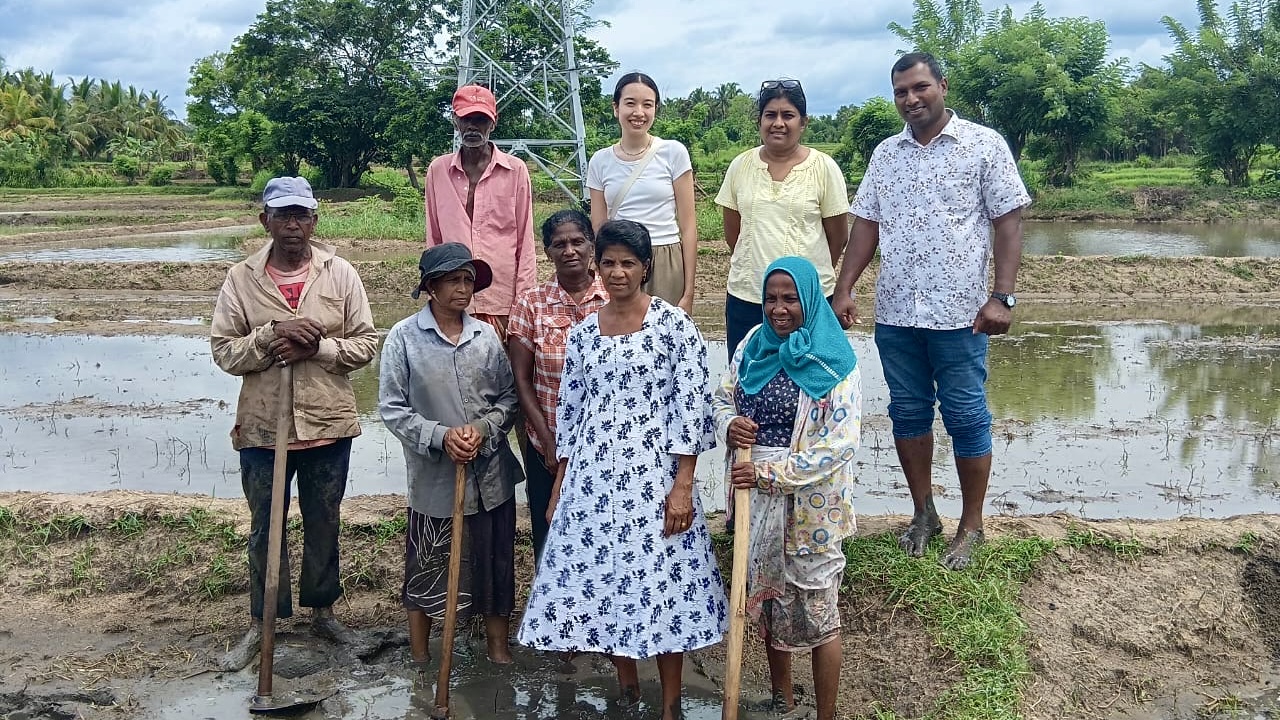
Outside in the sunny fields, we met the group’s leaders, who were actively working the fields. They told us how their group leases paddies at a high cost: through a sharecropping model, half their yield goes directly to the landowner. Their operating costs are also high, with fertilizer being especially expensive. They are saving their modest earnings with the hopes of one day purchasing their own fields. They want to escape their exploitative leasing cycle and provide their families with educational, nutritional, and financial benefits. Given that less than 20% of land in Sri Lanka is owned by women, this goal feels especially monumental.
After navigating our way back to the van, we drove to meet our last group of the day: Samagi Shakthi Women’s Society, who were waiting to welcome us in matching t-shirts. A multigenerational group, this society consists of women who, with permission from their husbands, meet on a regular basis to work together.
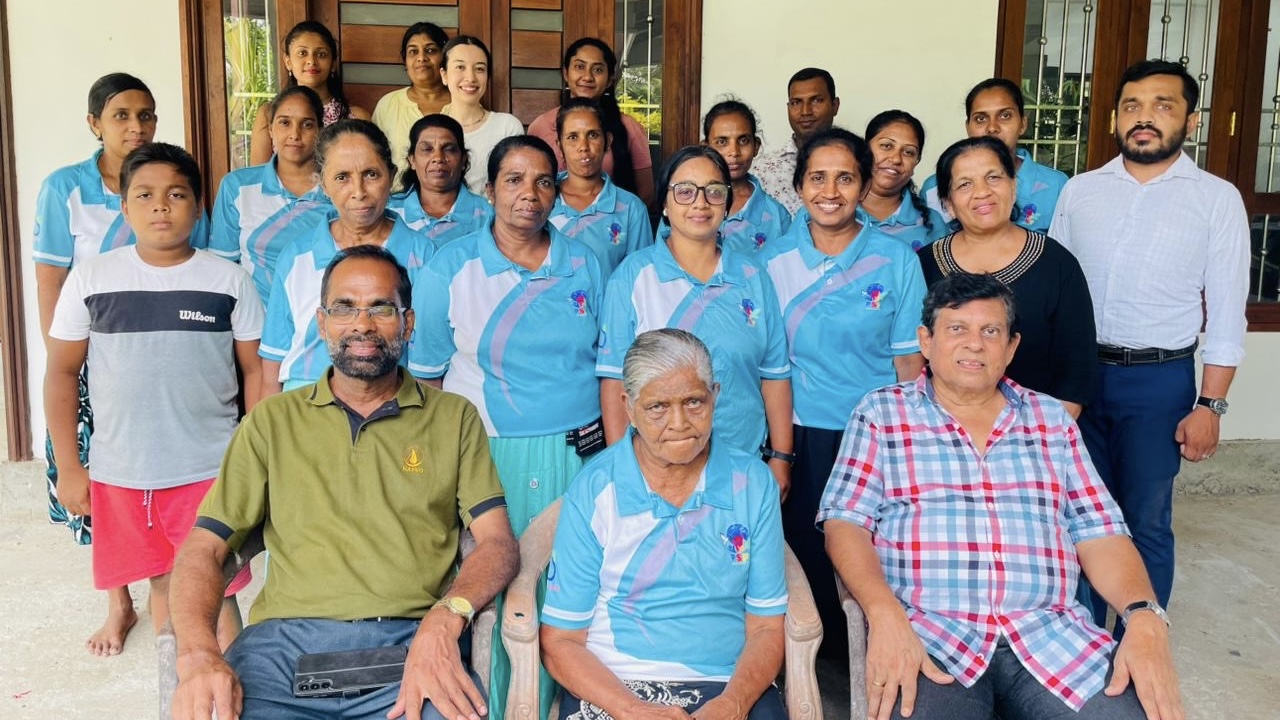
This group also pools their savings to support members in need. But on top of this, they leverage their home gardens, crafting abilities, entrepreneurship, and community networks to add to their savings and support their village. They told us how they run fundraisers by hosting auctions and raffles to sell ice cream, handcrafted decorations, and produce. And they told us how over 20 families in their village were affected by landslides after Cyclone Ditwah, and how their group came together to prepare lunch packs for them.
I was inspired to see how these women — all of whom have families, jobs, and/or are aging — find the time and energy to support one another and their community. After the meeting, they held an auction and I won with my bid for a bright little flower bouquet made of pipe cleaners. Then, they welcomed us to a delicious lunch of watermelon juice, rice and curry, and ice cream.
What’s Next?
As impactful as these groups already are, they are all looking to grow. Nirmani Women’s Society hopes to empower their village’s young women to start a similar initiative. Hiru Kirana Society hopes to buy their own land. And Samagi Shakthi Women’s Society hopes to access an online marketing platform so they can expand their businesses further. Ultimately, they want to build a brand as role models for rural women’s empowerment; both in their village and around the world.
When I reflect on this day, the women’s hospitality strikes me immediately. Despite facing many challenges, they welcomed us with veritable feasts, handmade gifts, and smiles on their faces. Even the women ankle-deep in the rice fields invited us for tea. Under this generosity, though, there lies a steady strength and sense of community. These women are struggling with poverty, geographical isolation, and the aftermath of Cyclone Ditwah. As the District Coordinator told me, “they are suffering.” But in the face of immense challenges, they are working together to improve their lives, support their communities, and inspire others.
In Canada, I think we can take women’s empowerment for granted. All my life, it’s been normalized that I should be able to access higher education, autonomy, resources, and success as a woman. But learning about the realities of rural women in Sri Lanka reminded me to be grateful for my own empowerment, and more importantly, to keep fighting for gender equality and poverty alleviation around the world. To spread the message of the women who are working so hard to improve their lives and those of their community members.
Now, every time I drive past a rice field or walk past the handcrafted bouquets brightening up my bedroom, I am reminded of these inspiring women and the support they need to continue making change. I think of the elderly woman who, with the same care she offers to her society members, took me in her arms and welcomed me as her own daughter. I think of the women rice farmers who are struggling to achieve autonomy. I think of the young woman who works at her village nursery while also caring for her family and balancing her society’s books.
The next time you eat rice or see a bouquet of flowers, I hope you will think of these women, too. I hope they will inspire you and remind you to continue fighting for justice around the world. They are working hard to improve the world they live in, and we should be, too.
To learn more and/or to support NAFSO’s women empowerment efforts, please visit their website or Facebook page, or contact nafsosl@gmail.com.