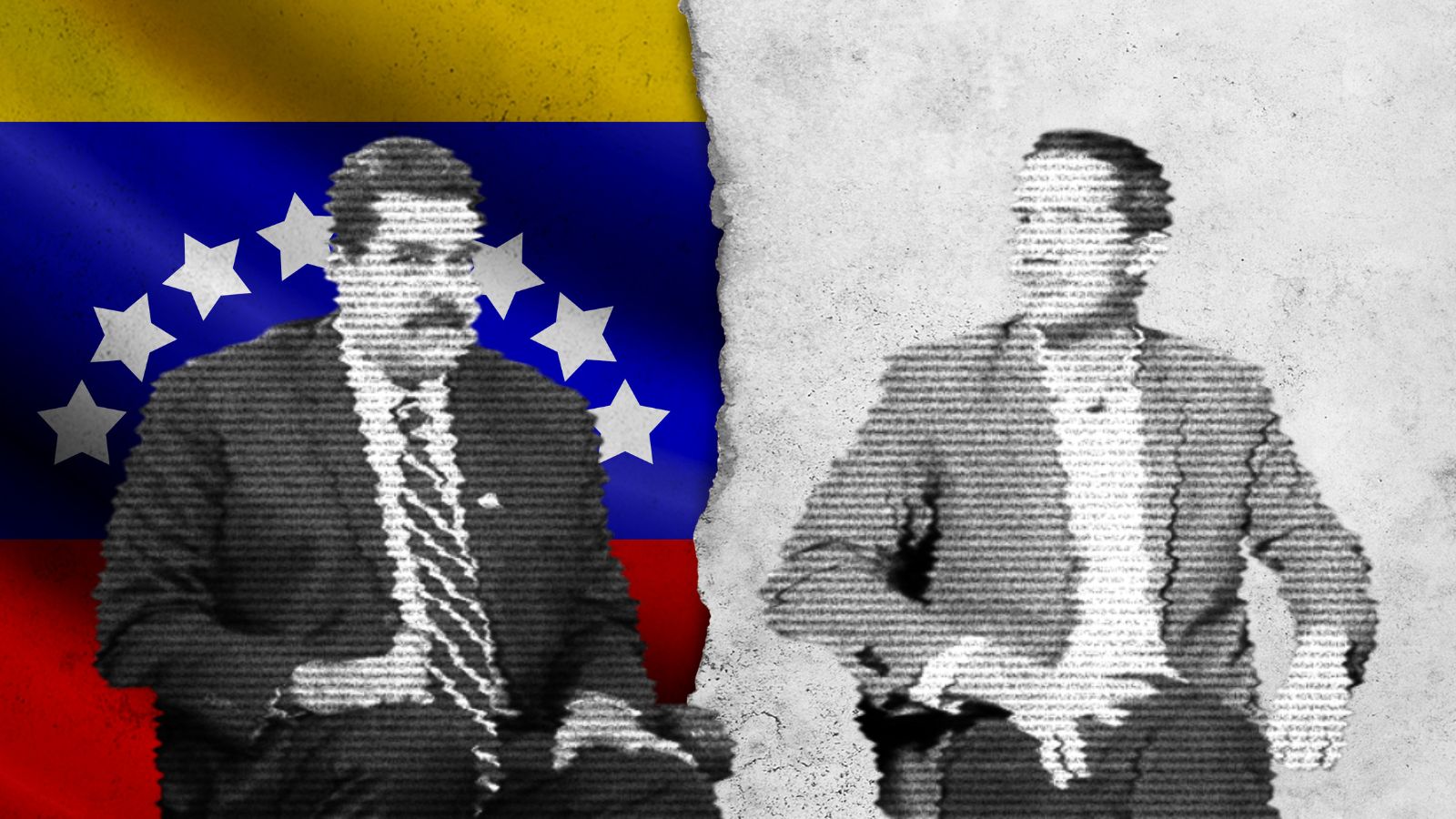
On Wednesday 23 January, the President of the Venezuelan National Assembly, Juan Guaidó, proclaimed himself “interim president” of his country, replacing the democratically elected President Nicolas Maduro, with the immediate recognition of the United States. Alternatives strongly condemns the actions of the Trump administration and its allies, which violate the principle of non-interference in the internal affairs of another sovereign state. Barely concealed, the pursuit of imperialism in Latin America, which is seen as Washington’s backyard, is manifesting itself in various forms of offensives on various fronts, both media, legal and diplomatic, as well as economic warfare measures.
The intensification of hostility towards Nicolas Maduro is particularly in line with recent pressure from the Lima Group, which, in its Declaration of 4 January, announced that it did not recognise the “legitimacy of Nicolas Maduro’s new presidential term” and was preparing an escalation of detailed measures which, behind the rhetoric of “restoring democracy”, has all the appearance of a regime change whose scenario is skilfully programmed.
Thus, it is surprising that Canada, a member of the Lima Group, through the voice of the Minister of Foreign Affairs, Chrystia Freeland, did not take much time to reflect before taking sides. Instead of calling for dialogue and respect for international law, Canada was among the first countries to emulate the Trump administration and to recognize Juan Guaidó, as interim president of Venezuela, with right-wing Latin American governments, including Brazil, Colombia and Argentina.
Whether it is the messages of support for the Venezuelan opposition sent by US Vice President Mike Pence or the ultimatum from six European countries that Maduro call for new elections within eight days, we are witnessing a variable geopolitics of democracy which, far from promoting peaceful dialogue, puts in place a risk of civil war – or even the legitimation of a possible military invasion. Also, the recognition of Guaidó as interim President of Venezuela, which is, moreover, not in conformity with the Charter of the Organization of American States, risks exacerbating a social and political polarization for which the people of Venezuela are paying a heavy price. The population, especially the poorest, is already experiencing unnecessary suffering as a result of inflation, falling GDP and oil revenues, in addition to the daily damage caused by illegal U.S. economic sanctions.
Alternatives wishes to recall that, in accordance with the principle of state sovereignty, it is up to Venezuela to determine the modalities of its political system, including the timing of elections, regardless of the interests of the United States and its allies in one political sector rather than another. It is also the prerogative of Venezuelan sovereignty to decide on the management of its oil activities. Venezuela has the largest reserves of crude oil in the world, and in a recent interview with John Bolton, the White House National Security Advisor, he was quick to state unequivocally that it is the exploitation of oil by American companies that is the primary interest of the United States in Venezuela.
The attempt to create a parallel power around the National Assembly and the multiple diplomatic and economic confrontations with Maduro that we are currently witnessing, which are akin to a declaration of war, are creating conditions that are the antithesis of democracy and which, moreover, aggravate the humanitarian situation.
Finally, let us remember that interventionism and the desire to change political regimes has demonstrated its failures more than once, in very recent examples such as Libya and Syria. Lessons must be learned in order to avoid a disastrous worsening of the situation and the death of civilians. We call on Canada to support a solution through dialogue and negotiation that respects the sovereignty of the country and the principles of international law, and to ensure that the Lima Group maintains its position of non-military intervention in the face of the crisis currently facing Venezuela.