
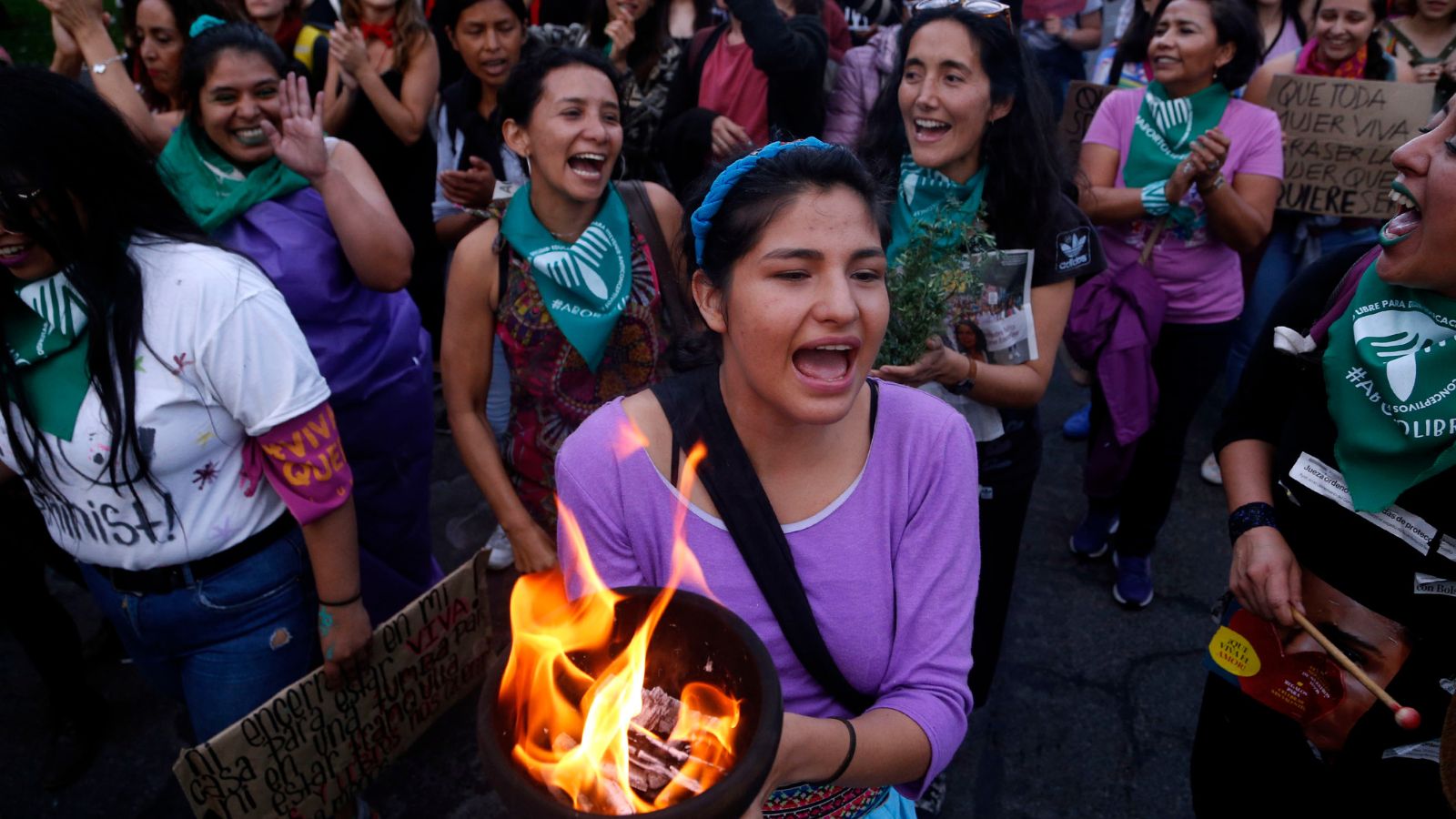
On the occasion of International Women’s Rights Day, Alternatives would like to highlight the exceptional achievements of women that mobilized to defend their rights around the world. Their struggles against oppression, exploitation and violence are at the root of the radical change in society that we want to collectively achieve.
Since its creation in 1994, together with its members, partners and allies, Alternatives has placed equality between women and men at the centre of its work. A resolutely feminist commitment, in an intersectional and anti-colonial approach, animates all the projects we carry out. The mobilization of women is not only a fight against inequalities, but is much broader, through a constant work of denouncing the effects of patriarchy in all structures of society, the disproportionate impact on women and girls of poverty, crises and wars, as well as systemic discrimination, including multiple forms of violence.
Our work is inspired by all our partners, these activists and committed women, who are calling for a transformation of our societies to showcase more justice and equity. Currently, in the Middle East, through our project in support of women journalists and civil society, we are working with women who dare to raise their voices and challenge traditional roles. In Palestine, Iraq, Yemen, Jordan, Lebanon and Sudan, the commitment of our partners to denounce a prevailing culture of impunity that persists and trivializes harassment and sexual and gender-based violence in the workplace and online will lead, as part of the project, to a Regional Observatory of Violations of Women Journalists’ Rights. Also by way of example, in the Carrefour-Feuilles neighbourhood in Port-au-Prince, we are working with APROSIFA (Association for the Promotion of Integral Family Health), which has created the Nutritional Recovery Centre, a place of dignity for mothers that proposes sustainable livelihood strategies through collective gardens and concrete means to counter the precariousness that affects and marginalizes women.
We also welcome initiatives that today are raising awareness of the multiple forms of feminist demands, from the South and the North, at the crossroads of other social movements, including anti-capitalism, anti-racism and political ecology: the resistance of indigenous and racialized women in the Americas, the unprecedented feminist general strike movement in Spain (huelga feminista) on March 8 last year that is now burgeoning (Collecti. e.f 8 maars), the mobilization of women for the legalization of abortion in Argentina, among others. These are examples of solidarity links between women’s groups and between movements that need to be recognized and strengthened.
On this #March8, we remind you that we must make women’s rights struggles and feminist struggles a personal and collective commitment to build the world of solidarity that we want!