
As a member of AQOCI and an NGO specializing in international solidarity and cooperation for over 30 years, Alternatives supports the recommendations of this group of more than 70 organizations from 14 regions of Quebec working abroad and locally for sustainable and human development. Here is the letter sent to Christopher Skeete, Minister of International Relations and La Francophonie.
Dear Minister,
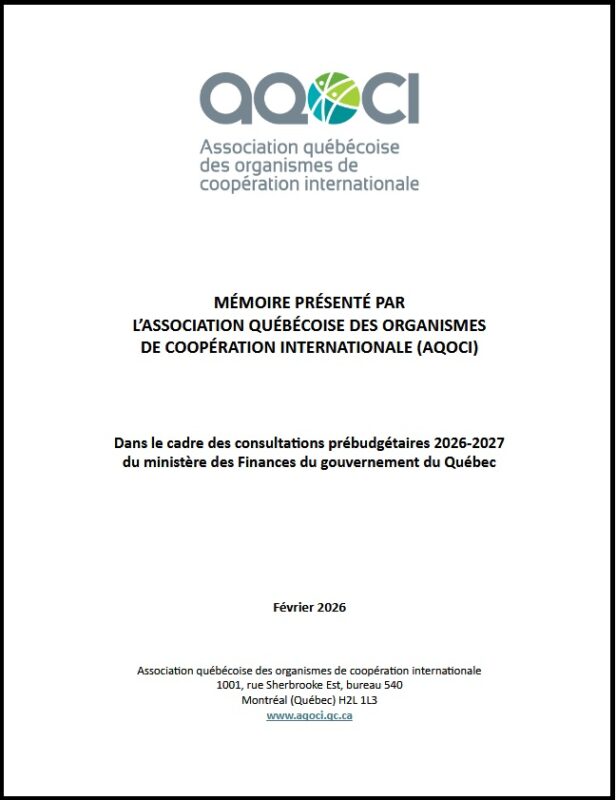
As a member of the Quebec Association of International Cooperation Organizations (AQOCI), Alternatives wishes to formally endorse the 2026-2027 pre-budget brief submitted by AQOCI as part of the Quebec Ministry of Finance’s consultations.
Since 1994, our organization has been working in the field of international solidarity and global citizenship education, in partnership with civil society organizations in Quebec and internationally. Its interventions aim to strengthen local capacities, promote social justice, and encourage civic engagement, particularly among young people and women.
 Through its actions, the organization contributes significantly to Quebec’s international influence by promoting its expertise, leadership, and values of solidarity, cooperation, and sustainable development. The initiatives implemented also generate tangible economic and social benefits for both partner communities and Quebec, particularly through skills development, the creation of sustainable collaborative networks, and knowledge transfer.
With a view to long-term development, the organization takes an approach based on reciprocity, participation, and respect for local contexts. This ongoing contribution, spanning more than 30 years, positions Quebec as a credible and committed player on the international stage, while strengthening the capacities and expertise of its own organizations and citizens.
We fully endorse the recommendations presented by AQOCI:
- As part of the March 2026 budget, it is recommended that the Government of Quebec commit to maintaining, or even increasing, funding for the Ministry of International Relations and La Francophonie, recognizing international cooperation as a high-return economic investment, a tool for defending Quebec’s interests, and a lever for stability and resilience.
- Ensure the continued funding of the Québec sans frontières program in the March 2026 budget, recognizing its key role in international cooperation, humanitarian aid, and global citizenship education, as well as its contribution to maintaining skilled expertise in Quebec’s regions and training a new generation of internationalized leaders.
An investment with multiple returns
As demonstrated by the Raymond Chabot Grant Thornton study (2022)1, every dollar invested by the MRIF generates nearly $15 in economic benefits. For our organization, this public investment translates into the preservation of five skilled jobs in the Montreal area, the training of 20 young volunteers per year, partnerships with three Quebec universities, and support for 10 agricultural cooperatives in Africa.
Direct impacts in our communities
Beyond the numbers, our work in international cooperation generates concrete impacts:
- In Quebec, our activities result in raising awareness among 1,000 young people per year about social justice issues, creating lasting intercultural ties, and developing professional skills sought after by employers.
- Internationally: The project takes an integrated approach that combines access to energy, essential services, and women’s economic empowerment, generating sustainable economic benefits in Central America, Haiti, and the Democratic Republic of Congo.
- In Guatemala, a 100 kW hybrid energy system (hydropower–photovoltaic) provides reliable electricity to eight communities, or 450 households (2,500 people). This stable access to energy reduces costs, supports local productive activities, and stimulates the community economy.
- In Honduras, the actions of CAIME and FOTSSIEH have made it possible to offer 338 medical consultations, 234 psychological consultations, 15 legal services, and 162 telemedicine consultations, while training more than 300 people. Improving women’s health, skills, and leadership directly strengthens their participation in the informal economy and the sustainability of their incomes.
- In rural areas of Haiti, 150 women received support in developing income-generating agricultural activities (market gardens) and training in digital communication, which has promoted economic diversification and food security.
- Overall, the project demonstrates that targeted investment in energy and women’s empowerment has a high economic leverage effect, directly benefiting more than 3,000 people, while strengthening resilience and long-term local development.
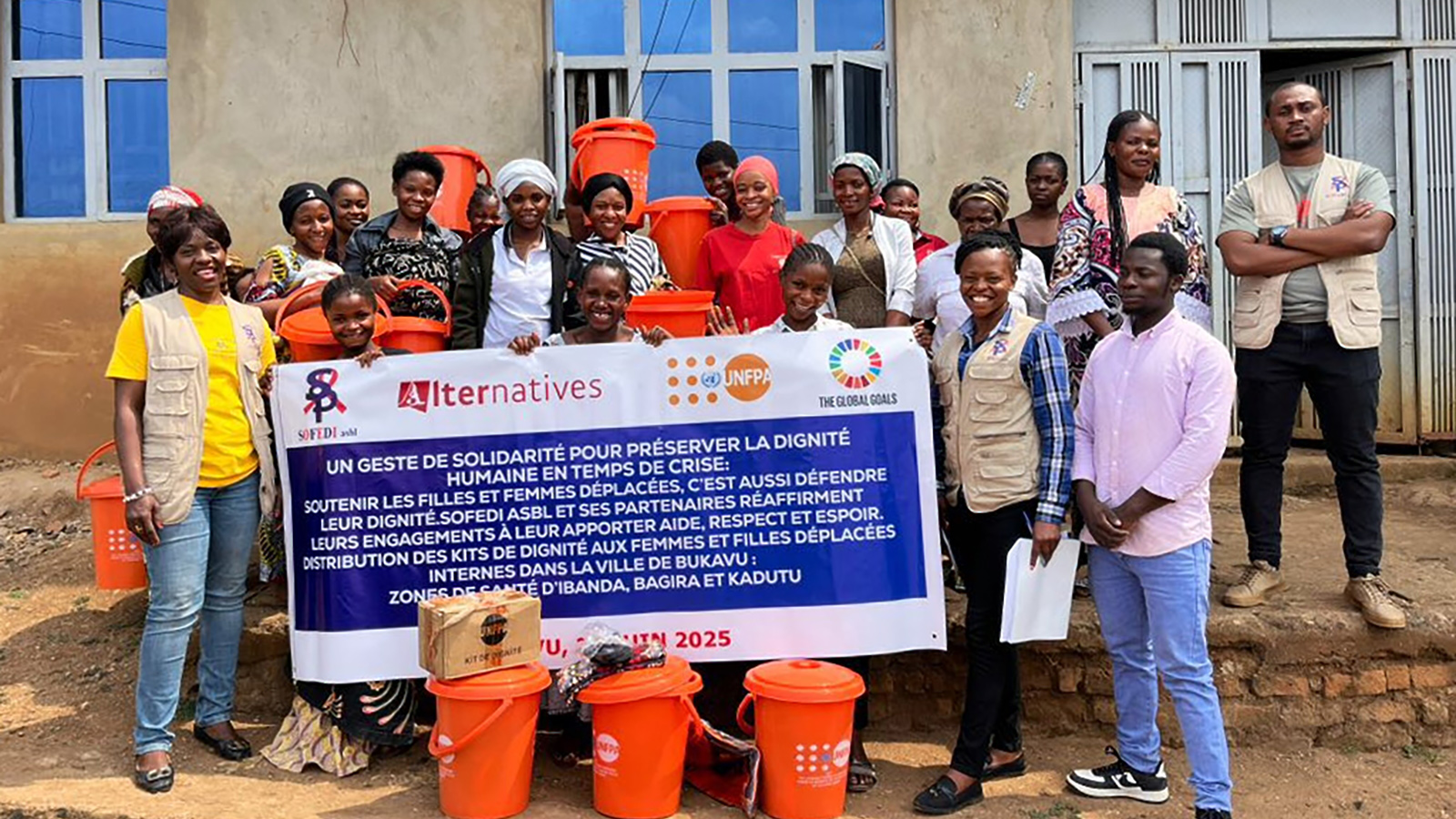
- In the DRC, the distribution of emergency food aid to around 200 displaced women and girls has reduced household expenditure, freeing up limited financial resources for other essential needs (temporary housing, healthcare, transportation). This minimal stabilization helps prevent the use of negative survival strategies that are costly both economically and socially.
A unique infrastructure to preserve
AQOCI and its 73 member organizations constitute a unique and proven infrastructure serving Quebec’s international influence. Our expertise, networks, and in-depth knowledge of local contexts represent a strategic asset that would be costly to rebuild if compromised.
In a rapidly changing world marked by geopolitical instability, climate crises, and economic fragmentation, maintaining Quebec’s international engagement is not an expense, but a strategic investment in building a more stable, inclusive, and sustainable common future.
We therefore invite you, Minister, to respond favorably to the three recommendations made by AQOCI in its 2026-2027 pre-budget brief.
We remain at your disposal for any further information you may require.
Yours sincerely,
References
1. Raymond Chabot Grant Thornton. (2022). « Étude sur les retombées économiques de la solidarité internationale au Québec ». Online (in French) : https://cdn-contenu.quebec.ca/cdn-contenu/admin/relations-internationales/publications-adm/autres-publications/RA-rapport-etude-economique-solidarite-internationale.pdf