
Food security for urban communities of Sancti Spíritus

© Alex Bédard
Description
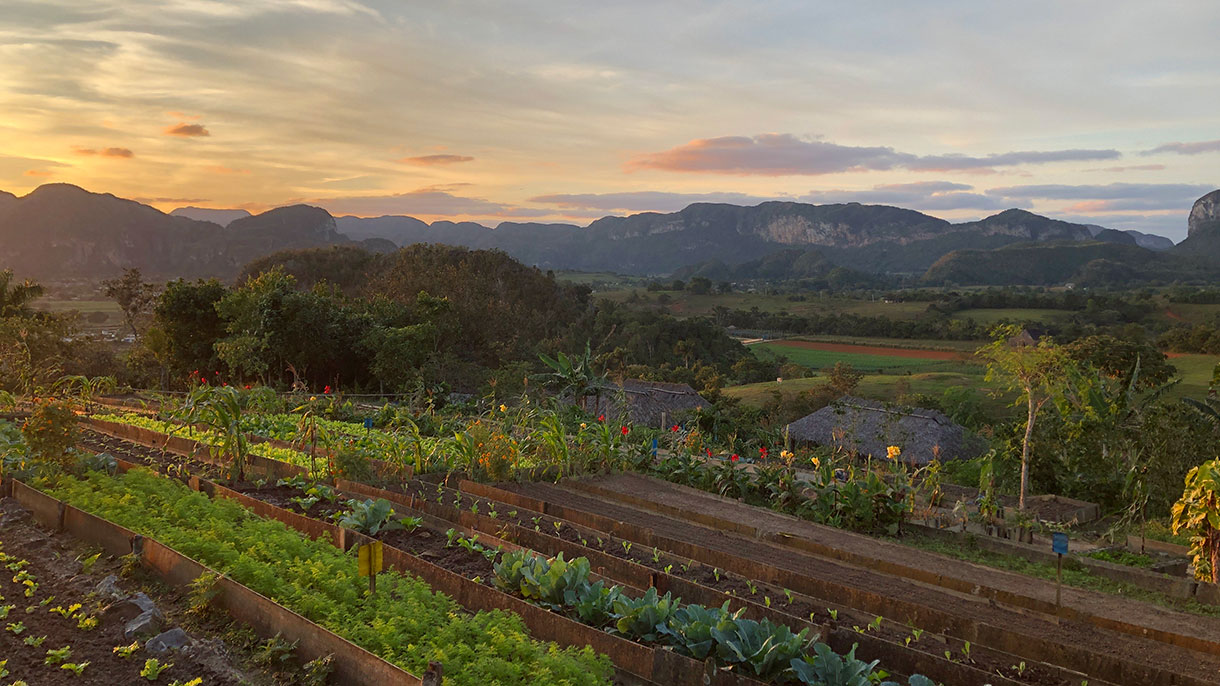
The embargo imposed on Cuba by the United States and the collapse of the Soviet bloc in the early 1990s led to a serious economic and food crisis on the island. In response, the country has shifted from an industrial agricultural model to agricultural practices that focus on food security and the local economy. Thus, as early as 1994, permaculture was integrated into the urban environment.
The island now has nearly 400,000 farms in an area with an agricultural capacity of 70,000 hectares in urban areas. Each year, these urban gardens produce more than a ton and a half of vegetables. But over the last decade, urban gardens have become commercially oriented. Gardens have become specialized to the detriment of local access to fresh food for individuals and families. In addition, the cost of fruit and vegetables remains very high, making it difficult for families to obtain supplies from urban markets.
Conducted under the Québec Sans Frontières (QSF) program, this project therefore aims to create community gardens to bring the benefits of urban agriculture to the family and community sphere in the town of Sancti Spíritus, combat heat islands and improve air quality.
As a first step, a group of young people from Quebec will work with twenty-four families from the Los Olivos neighbourhood in Sancti Spíritus to set up a collective vegetable garden. The initiative will draw on Quebec experiences in collective management of agricultural spaces and above-ground farming techniques.
Subsequently, as part of the reciprocity component of the Québec Sans Frontières program, we will welcome a participant from the community of Los Olivos to Montréal, where they will have the opportunity to acquire knowledge, skills and concrete work experience in urban agriculture. This experience will be useful in expanding the scope of the initiative in Sancti Spíritus.
Year(s)
2019–2020Region(s)
Latin America and CaribbeanLieu(x)
CubaShare
Objectives
The project contributes to strengthening community-based urban agriculture in Cuba.
The two components proposed as part of the Québec Sans Frontières program, a QSF internship for the target audience and a reciprocal internship, aim to increase the skills and knowledge of members of the Los Olivos community in urban agriculture and permaculture and to bring about the emergence of new, more sustainable environmental practices (composting, above-ground and greenhouse cultivation, rainwater harvesting, sustainable community space management, etc.). The initiative also aims to raise public awareness of the benefits of community-based agriculture and to mobilize people around collective projects.
Partners
Alternatives’ partner in Cuba is the Antonio Núñez Jiménez de la Naturaleza y el Hombre Foundation (FANJ). Alternatives has already organized three QSF projects with FANJ in 1997, 2007 and 2009. Established in 1994, FANJ is a non-governmental scientific and cultural institution dedicated to the research and promotion of healthy and sustainable environments locally, nationally and internationally. Among other things, FANJ created the Cuban Permaculture Movement, a national network of volunteers that aims to develop and promote permaculture with the support of the Cuban government.
In Québec, Alternatives collaborates with the Montréal-based organization Grand Potager, a very dynamic player in the field of urban agriculture, the creation of urban gardens and initiatives that integrate permaculture and various agricultural production techniques. The organization has acquired expertise in mobilizing communities around collective garden development projects and other greening activities. Grand Potager will participate in recruitment, pre-departure training and project evaluation.
Activities
The project has two main components: a target audience component and a reciprocity component.
Component 1 activities (target public component): Training by Quebec participants in the community of the Los Olivos neighbourhood in Sancti Spíritus on the creation and management of collective gardens; training on waste management and compost; training on water management and rainwater harvesting; development of a collective garden and agricultural work; production of a promotional document to publicize the project; workshops on the development of collective gardens using permaculture.
Component 2 activities (reciprocity component): Participation in activities organized by the Grand Potager; work in collective gardens; participation in Alternatives’ training activities; participation in the Cultiver Montréal project; identification of new techniques learned and applicable to the Cuban context; participation in the twelfth edition of the Montreal Summer School on Urban Agriculture (August 2020).

Impacts of the project
Pas d'articles avec ces critères...