
Strengthening women’s economic and social capacities in the municipality of Aquin

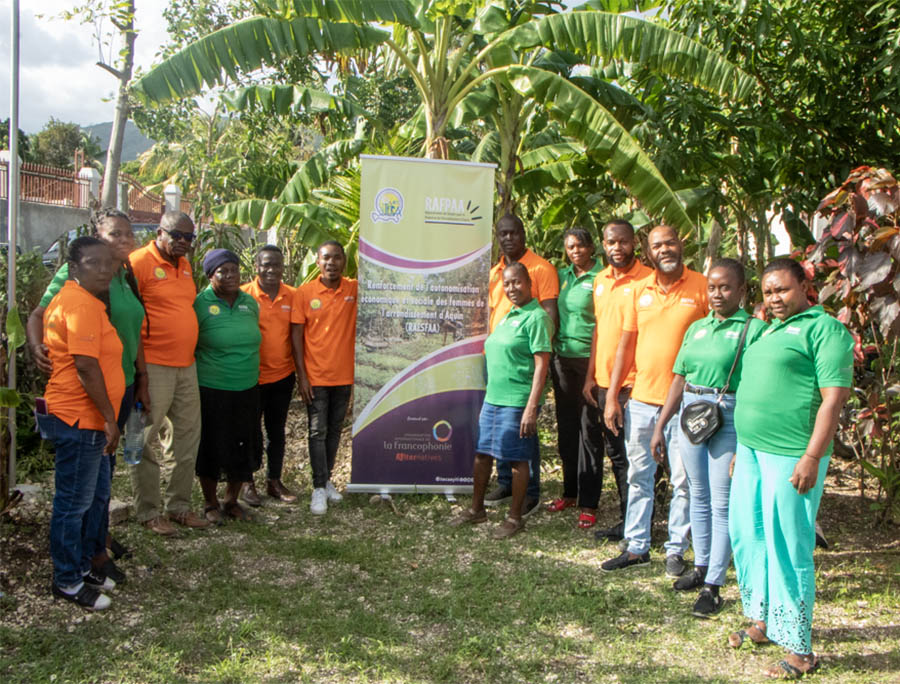
Photo credit : ITECA
Description
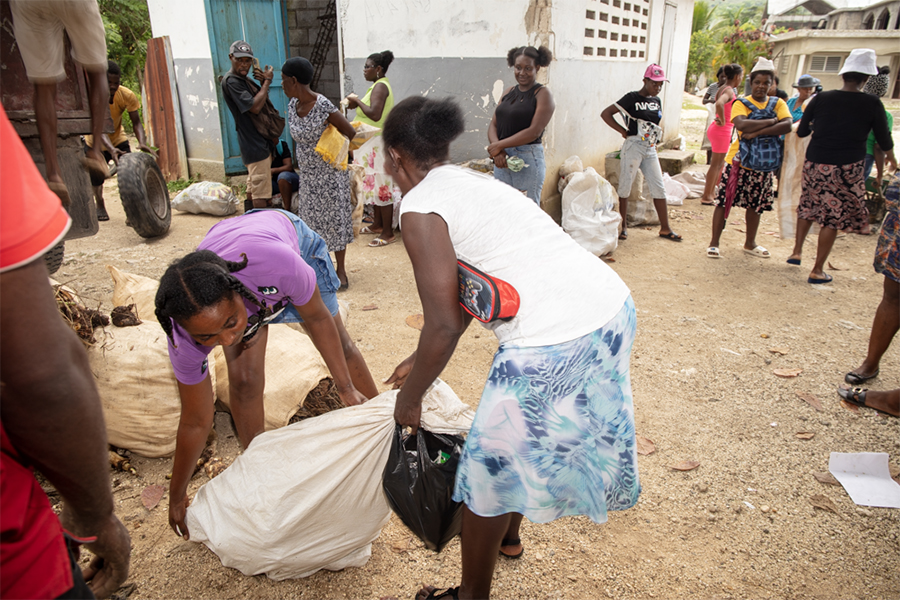
The project aims to strengthen the economic and social empowerment of women and girls in the municipality of Aquin by providing access to resources and opportunities in the agricultural and agri-food sectors. It responds to needs identified through local consultations and seeks to improve the living conditions of women and girls by positioning them as key actors in the economic development of their community.
Context
In Haiti, the socio-economic reality is marked by structural challenges such as widespread poverty, gender inequality, and natural disasters. It is one of the poorest countries in the region, with a fragile economy largely dependent on agriculture and food imports. Political instability, corruption, and weak infrastructure continue to hinder sustainable development. Despite their central role in the agricultural economy, women in Haiti face persistent social and economic marginalization. They are afforded limited access to economic resources, education, and employment opportunities, and suffer from gender-based violence and discriminatory norms. The commune of Aquin, in southern Haiti, shares these socioeconomic and environmental challenges.
Dependent on agriculture, local communities are particularly vulnerable to climate change. Women and young women in Aquin need access to sustainable agricultural resources, to strengthen their technical and entrepreneurial skills, and to obtain financial support to develop their economic activities.
The project will be implemented in a challenging context marked by political instability, economic recession, insecurity caused by armed gang conflicts, a growing number of internally displaced persons (362,901 as of March 2024), vulnerability to natural disasters, and increasing food insecurity. The latest analysis of the Integrated Food Security Phase Classification (IPC) from March 2024 reveals a significant worsening of the food crisis in Haiti, where 5 million people, or half the population, are now facing high levels of food insecurity. These challenges particularly affect women and girls, exacerbating the violence they experience and existing gender inequalities.
In the municipality of Aquin, women and girls face multiple barriers that hinder their development. Social and cultural norms often confine them to domestic roles, restricting their political and social participation. Legal barriers, along with limited access to financial services and digital technologies, affect the economic autonomy of women. Environmental challenges further impact the living conditions of women, such as work, health, food security, and access to resources. The underrepresentation of women in political institutions also limits their influence on the policies that affect them.
Needs identification was carried out in close collaboration with potential beneficiaries through community consultations, participatory workshops, and individual interviews. These approaches provided insight into the priorities and perspectives of women and girls affected by these challenges, ensuring that project interventions effectively address their specific needs.
Year(s)
2025–2026Region(s)
Latin America and CaribbeanLieu(x)
HaïtiShare
Objectives
The project has two specific objectives:
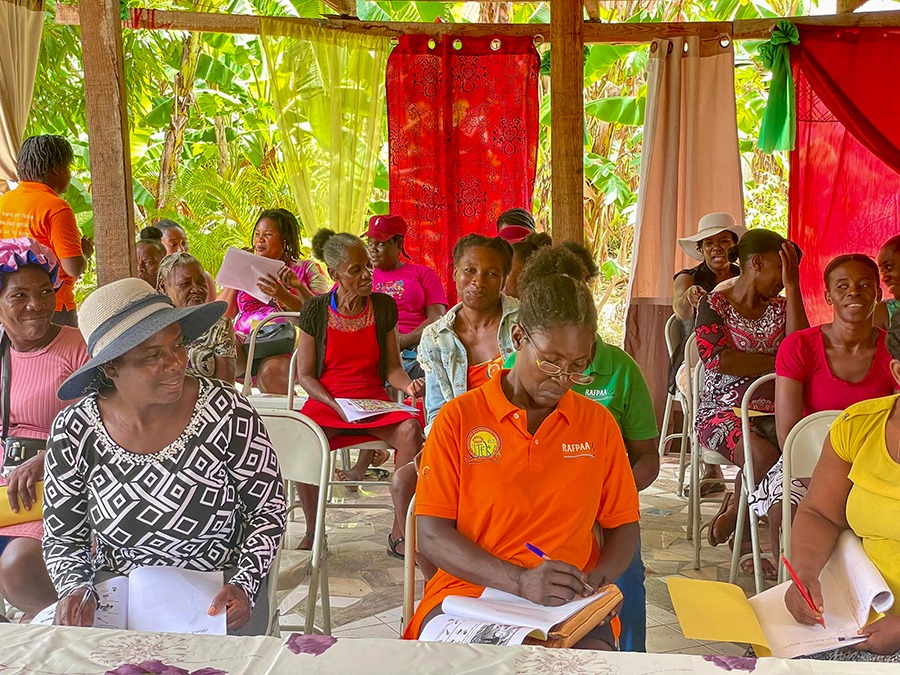
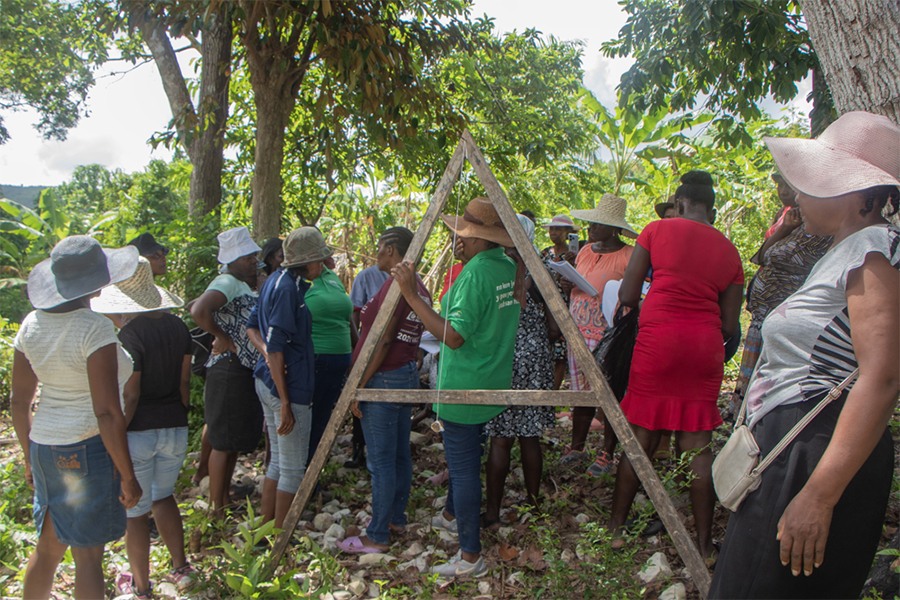
- Improving access to agricultural resources: Climate-resilient agroforestry and market gardening plots will be established and managed by women and girls, enhancing food security and environmental sustainability. Training will be provided to 80 women and girls on resilient agricultural techniques and farm management.
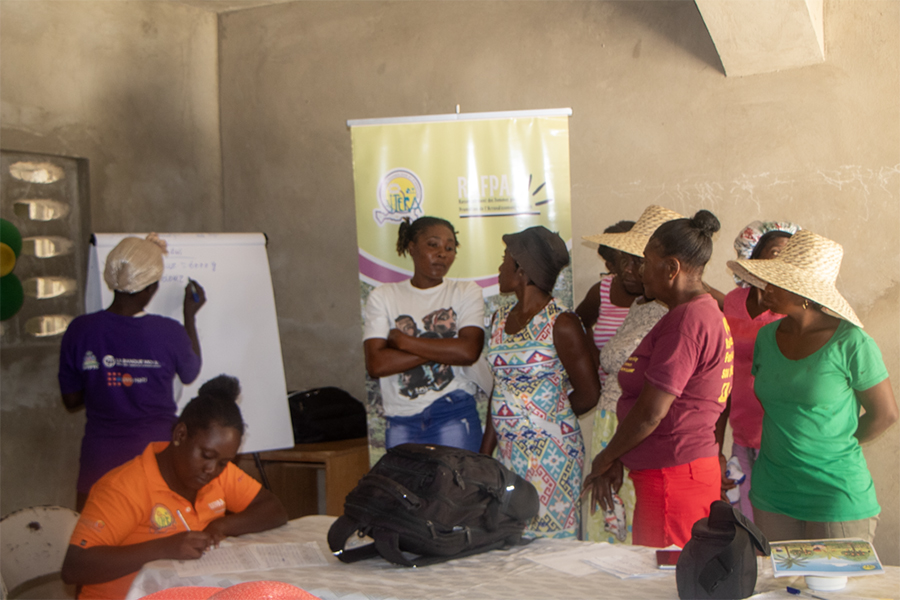
- Strengthening technical and entrepreneurial skills: Two women-led agricultural transformation initiatives will receive technical and financial support, including training in leadership, business planning, marketing, and the use of social media. Solidarity-based financing structures, such as mutual aid societies, will be set up to improve women’s access to financial services tailored to their needs.
The project is in line with local and national policies for sustainable agricultural development and climate change adaptation, and aims to make women key actors in local economic development by strengthening their financial autonomy and skills.
On August 19, 2014, the Haitian government adopted the 2014-2034 Gender Equality Policy. This policy highlights the persistent gender inequalities within Haitian society and outlines six main guidelines and clear objectives to be achieved over the next 20 years in the social, economic, and political spheres. These guidelines frame equality as a fundamental right, covering areas such as justice, education, health, the elimination of violence against women and girls, the economy and work, and participation in decision-making bodies.
This project aligns with this policy by promoting equitable access to resources and economic opportunities for women and young women in the municipality of Aquin.
Direct and indirect beneficiaries of the project:
Direct beneficiaries:
- Elderly women: 50
- Displaced women: 20
- Single mothers: 10
- Young women: 41
- Other women: 140
Indirect beneficiaries:
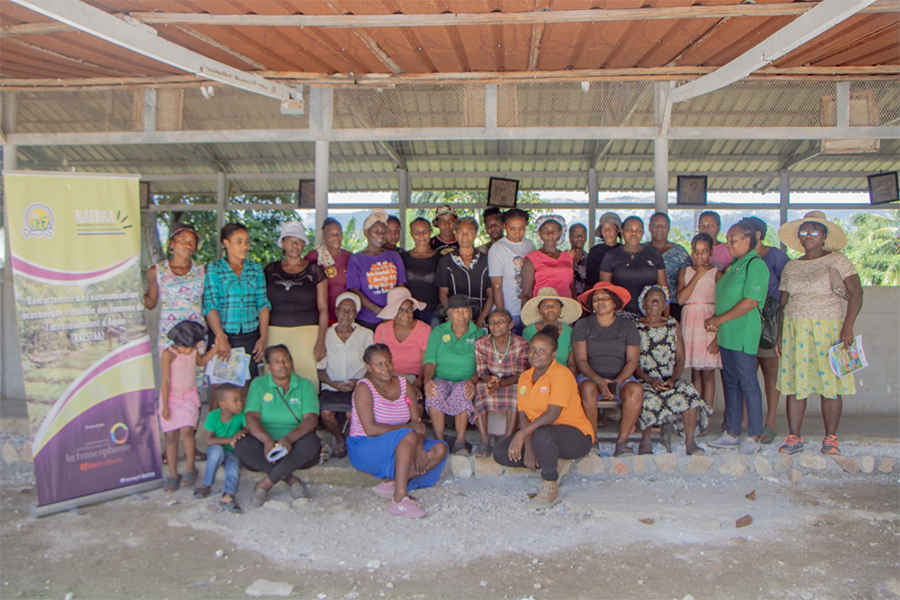
The women members of RAFPAA and the broader population of the municipality of Aquin in general, including1,325 individuals in particular.
Expected results:
R1.1: Agroforestry and market gardening plots, managed by women and young women, are established in the municipality of Aquin, thereby strengthening their role in food security and environmental sustainability.
R1.2. Women and young women improve their skills in sustainable and profitable agricultural techniques.
R2.1: Two women-led agricultural transformation initiatives receive technical and financial support, thereby promoting their economic independence and leadership in the agricultural sector.
R2.2: Women and girls gain access to financial services through to the establishment of solidarity-based financing structures, thereby strengthening their financial independence.
Partners
The project is funded by Québec Sans Frontières (QSF), “an international solidarity program for Quebec-based international cooperation organizations. It aims to respond to the needs identified by partners in the countries and communities targeted by the program, and seeks to give a voice in particular to women and young people in these organizations. The program also supports global citizenship education activities in Quebec.”
Our partner in Haiti for this project is the Institut de technologie et d’animation (ITECA), an NGO that supports peasant movements. In different areas Across various regions of Haiti, the Institute is conducting several pilot projects and focusing on training farmers and their organizations on various technical, organizational, commercial, and other aspects of local agricultural production.

Impacts de ce projet
Pas d'articles avec ces critères...