
Humanitarian Support and Gender-Based Violence Project for 350 Internally Displaced Girls and Women in Bukavu

Photo credit : Sofedi
Description
This emergency project aims to temporarily alleviate food insecurity and prevent or reduce exposure to STIs, HIV/AIDS, and gender-based violence among internally displaced women and girls in the city of Bukavu.
Context
The eastern part of the Democratic Republic of Congo (DRC), from the province of Ituri to Tanganyika, including North Kivu, South Kivu, and Maniema, has been experiencing unstable security conditions for some 30 years. This situation, which varies in intensity, is driven by repeated wars, sometimes between rebel groups and the DRC’s armed forces (FARDC), and sometimes between local militias, which are often ethnic in nature.
These wars and armed conflicts have been sufficiently documented and are driven in part by economic interests and attempts by certain neighboring countries to control areas of influence, despite the narratives that have been put forward. These wars and clashes, especially the war of 1996, have caused more than 6 million deaths according to United Nations figures, and more than 2 million internally displaced persons. These wars continue to destroy the socio-economic fabric of the country and tear families apart.
For the past three years, the M23 rebellion, associated with the AFC (Alliance Fleuve Congo) movement and supported by the Rwandan army (RDF), has been conducting offensives in North Kivu against the regular army, the FARDC. Until mid-January 2025, the AFC/M23 movement occupied the territories of Rutshuru, Masisi, and Nyiragongo, surrounding and threatening to take the city of Goma. The offensives intensified after January 20, 2025, taking the town of Sake, then Minova in South Kivu, before taking the city of Goma on January 27 at the cost of at least 3,000 deaths in three days of intense and violent fighting between the AFC/M23/RDF and the FARDC, with a large part of the FARDC troops retreating to Bukavu due to a lack of logistical support. The city of Bukavu was taken without resistance on February 15, 2025, following the successive captures of Kalehe, Katana, and Kavumu National Airport.
These clashes have caused large numbers of people to flee from Goma, Sake, Minova, and Kalehe to areas that have not been affected by violence, such as Idjwi Island, certain towns in the Kabare territory, and the city of Bukavu.
Under these living conditions, while waiting for a return to normalcy that will still take time, the risk of developing sexually transmitted infections (STIs) including HIV/AIDS, as well as exposure to gender-based violence, remains high.
Year(s)
2025Region(s)
Sub-Saharan AfricaLieu(x)
DRCShare
Objectives
SOFEDI’s work focuses primarily on strengthening the fundamental rights of women and girls in South Kivu, who are vulnerable due to violence, conflict, and poverty. Its work on rights is structured around four main areas:
- a) Promoting the sexual and reproductive health and rights (SRHR) of women and girls to improve access to healthcare and contraception. This work includes training for women and girls, as well as for men and boys, and training for trainers, strengthening the knowledge of healthcare teams, production and distribution of educational materials, feminine hygiene products, and contraceptives. This is a cross-cutting area of work.
- b) Promoting and protecting the rights of women and girls at artisanal mining sites;
c) Combating HIV/AIDS and other sexually transmitted infections (STIs), and improving access to related services;
d) Supporting women living with disabilities in crisis situations.
Specific objectives:
- Provide food aid to 350 internally displaced women and girls in the city of Bukavu
- Raise awareness among 350 internally displaced women and girls in the city of Bukavu about gender-based violence (GBV).
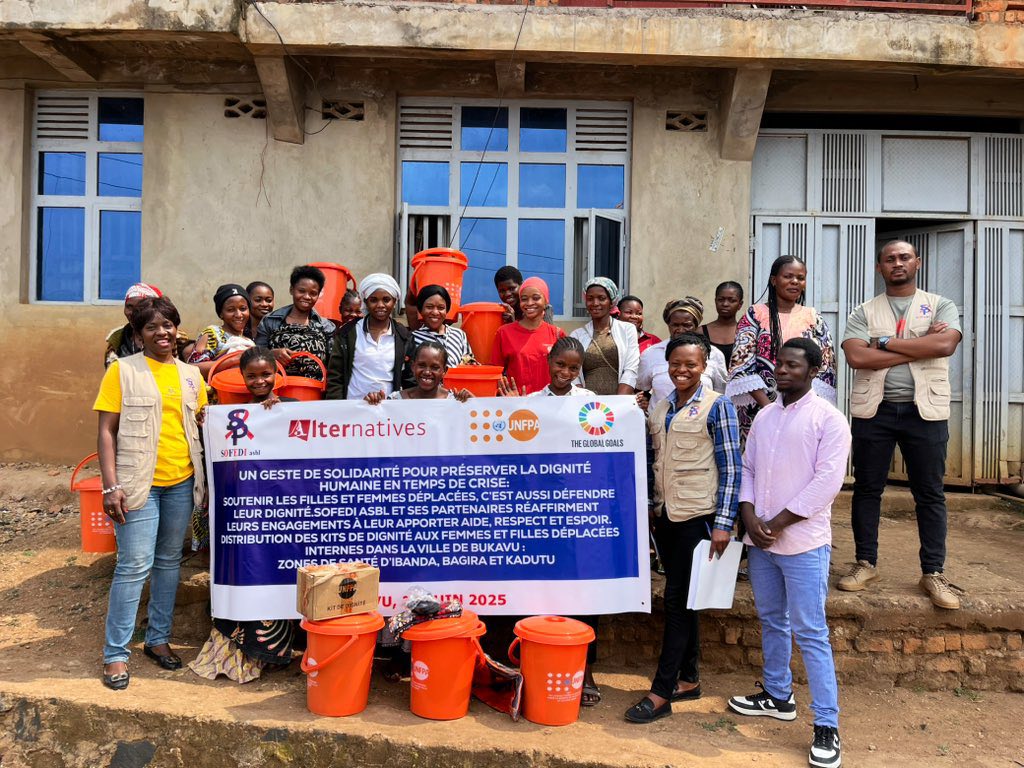
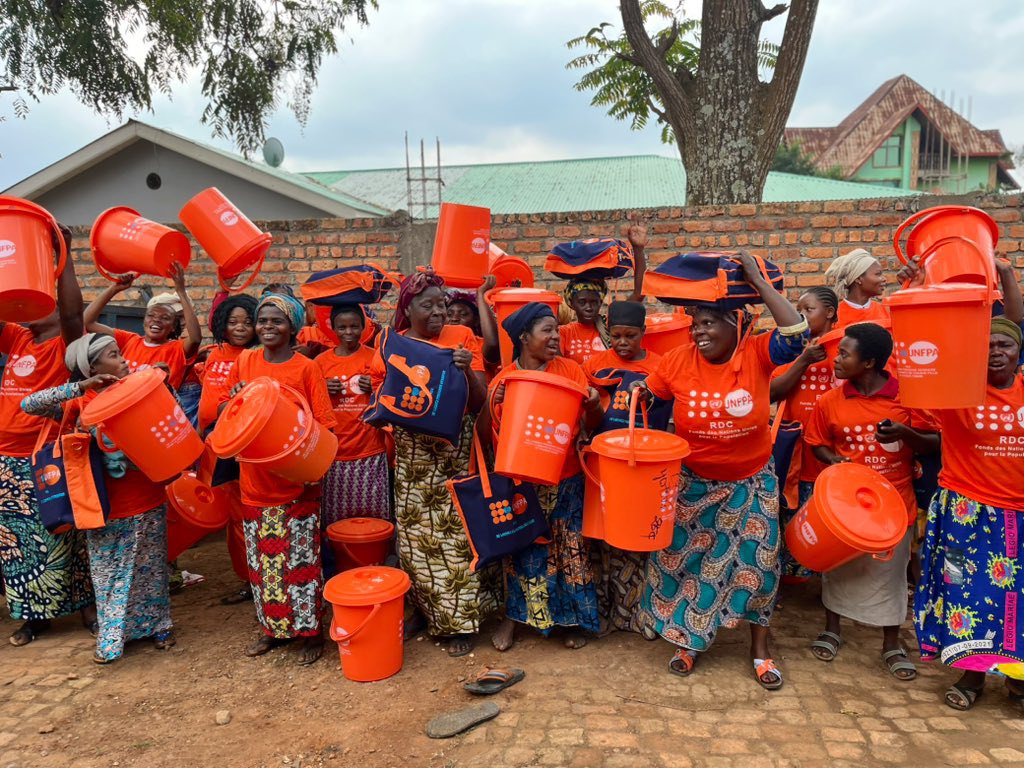
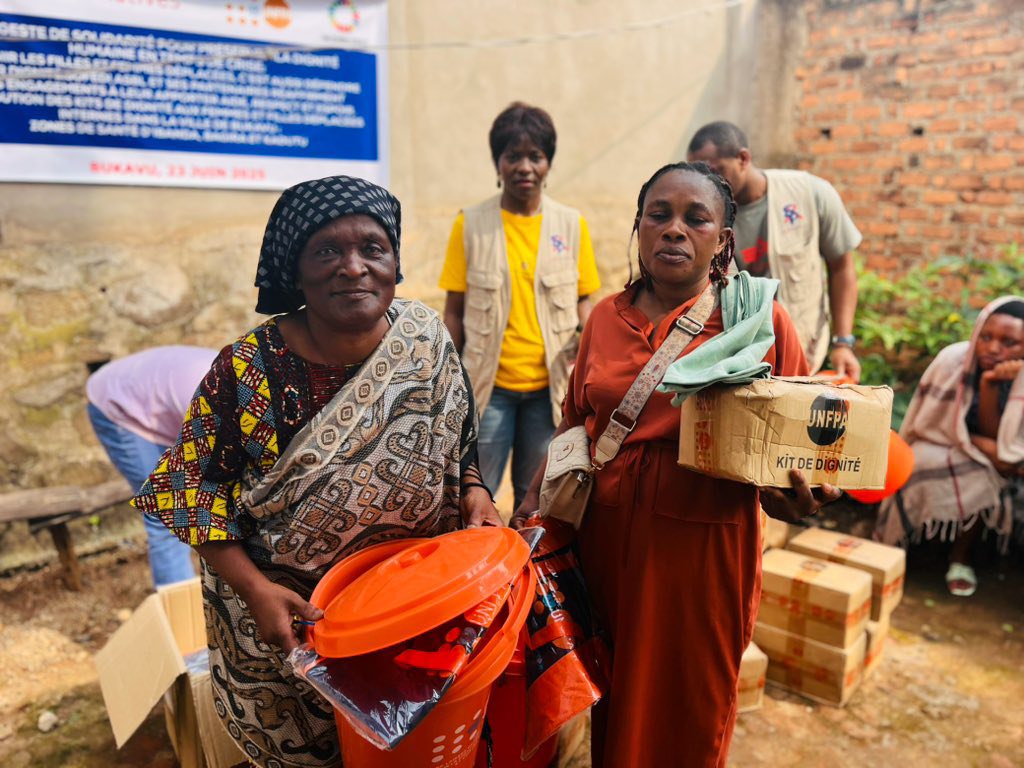
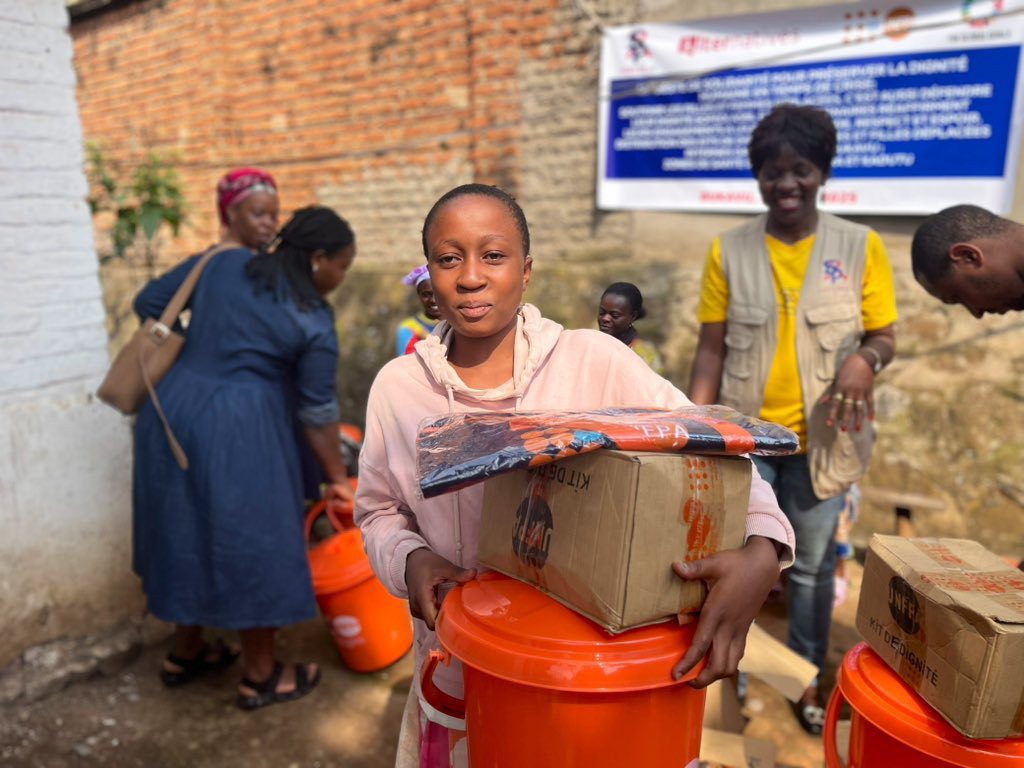
- Provide 120 internally displaced women and girls in the city of Bukavu with dignity kits.
- Provide 50 internally displaced women and girls in the city of Bukavu with PEP kits.
Expected results:
- 350 bags of corn distributed to internally displaced women and girls in the city of Bukavu.
- 350 internally displaced women and girls sensitized on gender-based violence (GBV) in the city of Bukavu.
- 120 dignity kits distributed to internally displaced women and girls in the city of Bukavu.
- 50 PEP kits distributed to internally displaced women and girls in the city of Bukavu.
Partners
The project is funded by Québec Sans Frontières (QSF), “an international solidarity program for Quebec-based international cooperation organizations. It aims to respond to the needs identified by partners in the countries and the communities targeted by the program, and seeks to give a voice, in particular, to women and young people in these organizations. The program also supports global citizenship education activities in Quebec.”
Our partner in the DRC is SOFEDI, whose mission is “inclusive development through local ownership of sustainable solutions that take into account the context of community needs.” Its main objective is to “contribute to improving the situation of women, girls, and other people in particularly difficult circumstances through self-promotion.” For nearly 15 years, SOFEDI has focused its interventions on four key areas: a) health, b) mining and extractive resources, c) demobilization, disarmament, and reintegration, and d) good governance and the fight against corruption. Our partner also works closely with a large network of organizations supporting with people living with disabilities.
Activities
- The program implemented a series of income-generating activities for mothers, enabling them to acquire skills and knowledge to develop sustainable livelihoods. The workshops included hands-on training in urban agriculture in the center’s model garden, guidance on meeting daily nutritional needs, and exploring additional sources of income such as marketing urban agricultural products or manufacturing products from recycled materials. For these young mothers, acquiring new skills and knowledge has yielded positive results, as they have gained the ability to provide adequate nutrition for their families without compromising their own consumption.

Impact of this project
Pas d'articles avec ces critères...